Fed’s Powell suggests tightening program could end soon, offers no guidance on rates
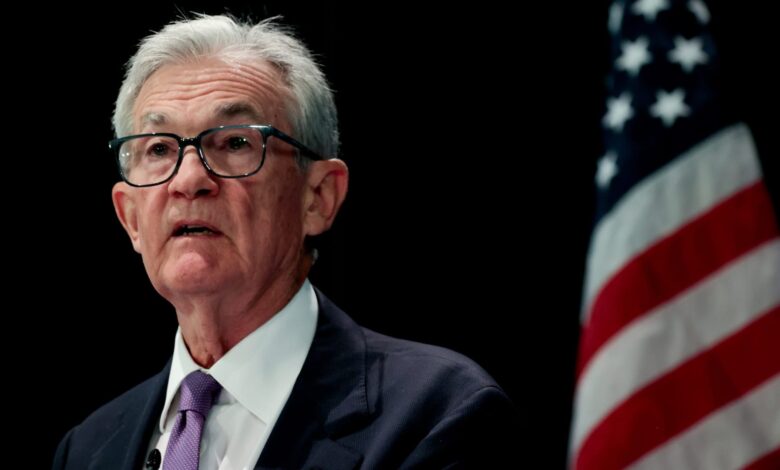
Jerome Powell, chairman of the US Federal Reserve, during a news conference following a Federal Open Market Committee (FOMC) meeting in Washington, DC, US, on Wednesday, Sept. 17, 2025.
Kent Nishimura | Bloomberg | Getty Images
Federal Reserve Chair Jerome Powell indicated on Tuesday that the central bank is approaching a point where it will halt the reduction of its bond holdings, while remaining silent on the future direction of interest rates.
Speaking at the National Association for Business Economics conference in Philadelphia, Powell provided insights into the Fed’s progress with “quantitative tightening” in reducing its $6 trillion securities portfolio.
Although Powell did not specify a timeline for ending the program, he mentioned that the Fed is close to achieving its target of “ample” reserves for banks.
“Our plan has always been to cease balance sheet runoff when reserves are slightly above levels deemed appropriate for ample reserve conditions,” Powell stated. “We may reach this point in the upcoming months, and we are carefully monitoring various indicators to guide this decision.”
While balance sheet details may seem technical, they hold significance for financial markets.
During the COVID-19 pandemic, the Fed aggressively purchased Treasurys and mortgage-backed securities, expanding its balance sheet to nearly $9 trillion.
Since mid-2022, the Fed has been gradually allowing maturing securities to roll off the balance sheet, tightening monetary policy. Powell’s remarks suggest that this process is nearing completion.
He acknowledged signs of tightening liquidity conditions that could impede growth if reserves are further reduced. However, he clarified that the Fed does not intend to revert to its pre-pandemic balance sheet size of around $4 trillion.
Additionally, Powell addressed concerns regarding interest payments on bank reserves, stating that discontinuing such payments would hinder the Fed’s policy implementation.
On the topic of interest rates, Powell emphasized the Fed’s focus on balancing employment and inflation risks, particularly in the context of a changing labor market.
“The recent slowdown in job growth and the challenges in the labor market have raised concerns about employment risks,” Powell remarked.
Regarding future rate cuts, Powell remained noncommittal despite market expectations and some Fed officials endorsing further reductions.
The Fed has faced challenges due to the government shutdown affecting economic data releases, but Powell assured that the Fed continues to monitor available data for decision-making.
“The outlook for employment and inflation has remained relatively stable since our September meeting, with economic activity showing signs of resilience,” Powell stated.
Upcoming reports, such as the consumer price index, will provide further insights into inflation trends influenced by factors like tariffs.