Fighting IP theft with AI and Hollywood dealmaking
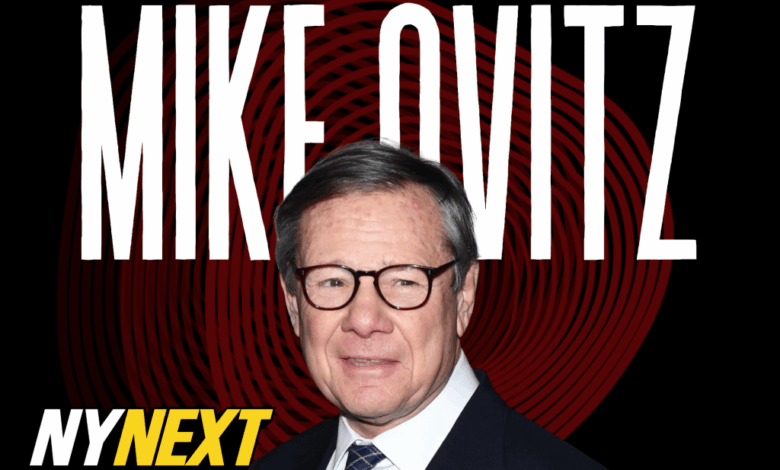
Mike Ovitz has spent decades watching Hollywood lose billions to piracy. Now, armed with artificial intelligence and a few phone calls to the world’s biggest music executives, the legendary power player thinks he’s finally found a way to fight back.
“The entertainment and media business has been on the defensive on IP theft from day one,” Ovitz told me. “For the first time in history, we are on the offense not the defense.”
The Hollywood insider, 78, has been in the intellectual property trenches for decades. He co-founded Creative Artists Agency in 1975 and served as its chairman for 20 years. It was the era of super agents, and Ovitz was one of the most notable in the business, repping top talent like Meryl Streep, Tom Cruise and Steven Spielberg. He left CAA in 1995 and joined Disney as president, but he clashed with CEO Michael Eisner and departed after 16 months — with a hefty severance package. He then shifted his focus to Silicon Valley, where he began investing in and advising top companies like Palantir and GoodRx as well as firms like Andreessen Horowitz.
Now, working with AI expert Walter De Brouwer, Ovitz has launched Sound Patrol, a research lab that can detect piracy, forgery and copyright infringement. They believe they have found a solution to IP theft in music — with plans to expand beyond audio.
“I don’t think that what Walter’s team came up with was doable 12 months ago,” he said. “The power of AI is beyond comprehension.”
Sound Patrol relies on neural fingerprinting — an advanced audio technology that gives different sounds fingerprints to identify them — which has been customized by De Brouwer.
Unlike Shazam, which only matches exact copies, Sound Patrol can detect distorted versions, manipulated audio, and AI-generated tracks that incorporate fragments from copyrighted works. The system operates as what the company calls a large-scale “24/7 surveillance system” monitoring for unlicensed activity in real time.
It’s a problem that has plagued the entertainment industry for ages, and Ovitz is combating it in a manner befitting a Hollywood veteran — dialing for dollars and making deals.
“I picked up the phone and called my longtime friend Lucian Grainge who runs Universal Music,” Ovitz said. “We both agreed that piracy has been the bane of the existence of IP holders for as long as anyone can remember. The minute I told him what it was about … he said I’m in.”
He struck a similar deal with Sony after speaking with top executives Rob Stringer and Dennis Kooker; Warner has yet to sign on.
Sony and Universal are allowed to deploy the technology however they want — whether that means sending warnings to infringers, issuing takedown demands through their legal departments or choosing to take no action at all.
De Brouwer also supports music labels reaching licensing agreements with AI companies, believing regulation will help distinguish legitimate use from “unfair and criminal” applications of the technology.
But music is just the starting point. The founders see their neural fingerprinting technology as applicable to any form of media — and beyond.
The technology works across what De Brouwer calls the “four modalities” of human communication: sound, voice, text, and vision. That means it could eventually detect manipulated videos, deep fake voices, fraudulent advertising and misinformation across any social media platform.
“Music is actually the hardest part to get into,” De Brouwer explained. “Once you can do it in music, you can do it in the rest of the entertainment [industry].”
Crucially, the system can trace content back to its source — identifying if something was created by AI, which model version was used and how it was distributed. The company has already announced plans to expand into video and sports content protection.
Sound Patrol operates on a subscription-based model, with major labels like Universal and Sony paying for access to its monitoring technology and real-time dashboards. This enterprise-focused approach, rather than targeting individual artists, has allowed Sound Patrol to quickly scale and position itself as industry infrastructure.
This story is part of NYNext, an indispensable insider insight into the innovations, moonshots and political chess moves that matter most to NYC’s power players (and those who aspire to be).
Ovitz sees IP protection as just the beginning. “The power of the algorithms that Walter and his team have created, the policing of IP protection is the tip of the iceberg for what this can do,” he said. “We’re going to use what we’ve developed for every conceivable kind of theft or untruth.”
Their ambitions extend to combating deepfakes in political advertising, fraudulent medical claims on social media, and synthetic content designed to deceive. Both founders emphasized that the ability to distinguish real from fake content is critical not just for entertainment, but for democracy and public health.
“We’re on the one-inch line, but we are an inch further than anybody else,” Ovitz said.
Preventing a future akin to the dystopian tale of “Mountainhead” where a social media platform’s deep-fake video tools lead to worldwide chaos, riots, and assassinations may seem like an insurmountable task without governmental intervention.
When questioned about Sound Patrol’s capacity to address this issue independently, Ovitz emphasized the necessity for collaboration between his company and the government, while also stressing the importance of fostering innovation without solely relying on governmental support.
“A public-private partnership is essential,” he asserted. “I firmly believe that the private technology sector must take the lead in this area.”
Ovitz, with a background in navigating copyright and intellectual property challenges that have plagued the entertainment industry since the days of VHS tapes and Napster, expressed newfound optimism in the potential of AI to tackle these complex issues.
“The current technological advancements have enabled us, for the first time, to effectively address these concerns… it’s truly remarkable,” he remarked.