Ford scraps F150 Lightning as mounting losses and falling consumer interest hits EV plans
By ALEXA ST. JOHN
In a significant shift, Ford Motor Co. announced on Monday that it is moving away from its ambitious electric vehicle plans due to financial losses and declining consumer demand for EVs. The Detroit-based automaker will now focus on investing in more efficient gasoline engines and hybrid EVs.
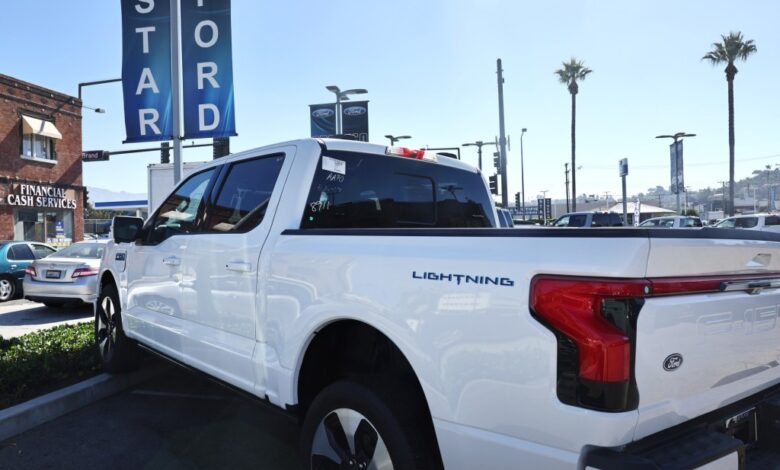
One of the major changes is the decision to discontinue the F-150 Lightning electric pickup truck and instead introduce an extended range version of the vehicle. Additionally, Ford will be making manufacturing changes, including renaming the Tennessee Electric Vehicle Center to the Tennessee Truck Plant, where new affordable gas-powered trucks will be produced. The Ohio Assembly Plant will also start producing a new gas and hybrid van.
Despite investing billions in electrification, Ford has incurred significant losses on EVs and is expecting a $19.5 billion hit in the fourth quarter. CEO Jim Farley stated that the company is reallocating capital to focus on higher-return growth opportunities such as Ford Pro, market-leading trucks and vans, hybrids, and the new battery energy storage business.
By 2030, Ford aims to have half of its global volume comprised of hybrids, extended-range EVs, and full EVs, up from 17% this year. The decision to eliminate the electric F-150 Lightning was influenced by the vehicle’s inability to meet production capacity.
Other automakers have also adjusted their electrified product plans in response to slower-than-expected consumer demand for EVs in the U.S. Challenges such as cost and charging infrastructure continue to hinder mainstream adoption of EVs.
While President Donald Trump has shifted U.S. policy away from EVs, the Biden administration had set ambitious targets for EV adoption, which have now been scaled back. Despite the challenges, the transition to electric vehicles is still seen as inevitable, though it may take longer than initially anticipated by automakers.
Alexa St. John is an Associated Press climate reporter. Follow her on X: @alexa_stjohn. Reach her at ast.john@ap.org.
The Associated Press’ climate and environmental coverage receives financial support from multiple private foundations. AP is solely responsible for all content. Find AP’s standards for working with philanthropies, a list of supporters and funded coverage areas at AP.org.