Friday could be a wild day of trading on Wall Street. Here’s why
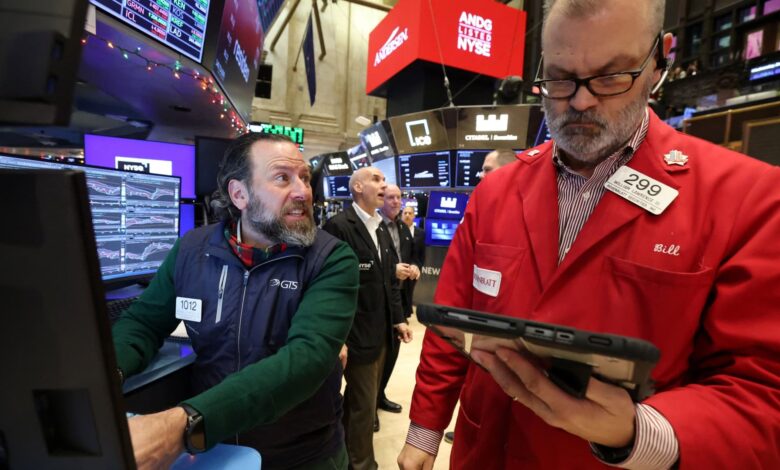
Wall Street is gearing up for what Goldman Sachs predicts will be the largest options expiration on record, leading to potential volatility as traders navigate this significant event. Options expiration days occur monthly, but Friday marks a rare occurrence known as a “quadruple witching” day, where options on index options, single stock options, index futures, and index futures options all expire simultaneously.
Goldman Sachs estimates that over $7.1 trillion in notional options exposure is set to expire this Friday, with a significant portion tied to the S&P 500 index and individual stocks. This December expiration is expected to surpass all previous records, representing about 10.2% of the total market capitalization of the Russell 3000 index.
Jeff Kilburg, founder and CEO of KKM Financial, anticipates heightened trading volumes as options traders finalize their profits and losses for 2025. The S&P 500, currently trading around 6,770, faces key levels, particularly around the 6800 strike price, which could see increased activity as traders defend these levels.
While the broader market may experience increased volatility, individual stocks with large open interest could see a different scenario. At-the-money options, where strike prices match the current asset price, may lead to a phenomenon known as “pinning,” where prices gravitate towards heavily traded strike levels as traders adjust their hedges. This can result in stocks hovering near key levels as options expire.
Stocks like GeneDx Holdings, BILL Holdings, Avis Budget Group, and GameStop, which have options expiring and represent a significant portion of their daily trading volume, could be prone to “pinning” and see price stability as a result.
Overall, the options expiration on Friday is expected to bring heightened activity and potential volatility to Wall Street as traders navigate this significant event. The market will be closely watched as traders adjust their positions and hedge their risks in response to expiring options contracts.