Friday’s jobs report likely will show hiring cooled in May. What to expect
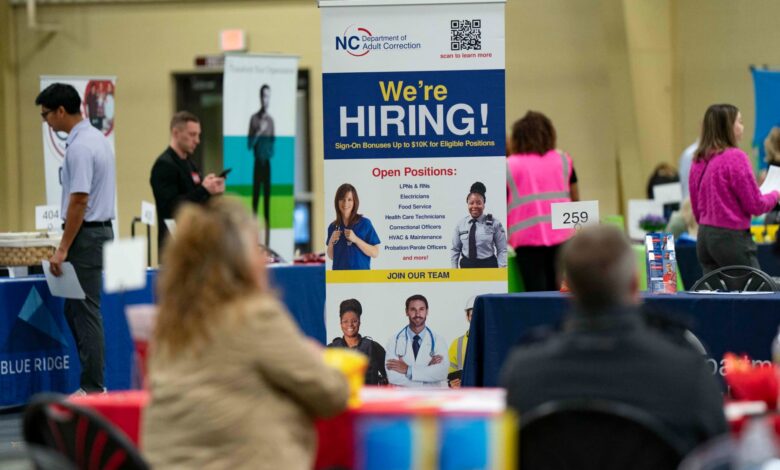
The latest data suggests that hiring may have slowed down significantly in May as businesses and consumers prepared for increased tariffs and economic uncertainty. The key question now is to what extent this slowdown has occurred.
Economists are anticipating that the May nonfarm payroll numbers, set to be released by the Bureau of Labor Statistics on Friday, will show a gain of around 125,000 jobs. This is a decrease from the initial count of 177,000 jobs in April, as well as the average monthly gain of 144,000 jobs so far this year. While a slight decline may not be cause for alarm, a more significant drop could spark concerns about the labor market and the overall economy, potentially prompting the Federal Reserve to take action on interest rates sooner than expected.
The report will be closely watched by investors, with expectations varying on how the numbers will impact market sentiment. A reading around 100,000 jobs could be seen as not as bad as feared, while anything below that threshold may reignite fears of a recession. On the other hand, a stronger-than-expected report could have negative implications for risk assets.
Various economic indicators, including surveys on manufacturing and services, as well as small business sentiment, have shown diminishing optimism about the economy due to concerns over tariffs and potential inflationary pressures. Hard data from ADP revealed that private payrolls only grew by 37,000 in May, a two-year low, while jobless claims have been on the rise.
The May payroll report will provide crucial insights into the state of the labor market, which in turn influences consumer spending, a key driver of economic activity. Despite prevailing concerns, some economists believe that it may take some time before the softer sentiment indicators impact other economic readings.
In the meantime, market observers will also be closely monitoring developments on the trade front, particularly as President Trump continues negotiations within a 90-day window. The uncertainty surrounding tariffs and trade policy is expected to weigh on the economy in the coming months.
Overall, the consensus estimate for the upcoming report includes a 4.2% unemployment rate, a 0.3% monthly increase in average hourly earnings, and a 3.7% annual rise in earnings. The Federal Reserve will be paying close attention to these numbers as they assess the impact of tariffs on inflation and the overall health of the labor market.