Global robotaxi race heats up between U.S. and Chinese rivals
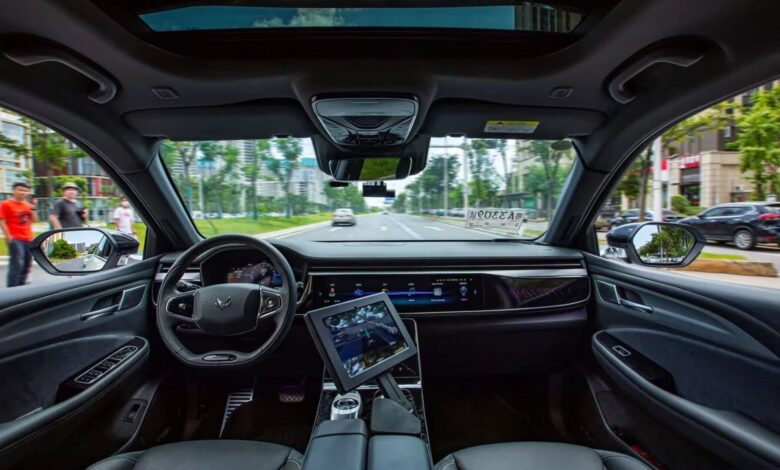
Chinese tech company Baidu made a groundbreaking announcement on Monday, revealing that it will be selling some robotaxi rides without any human staff in the vehicles. This move showcases the rapid advancements in autonomous driving technology and the increasing confidence in the safety and reliability of self-driving vehicles.
According to Baidu CEO Robin Li, the robotaxi industry has reached a tipping point, with a growing number of people experiencing driverless rides and providing positive feedback. This increased exposure is expected to accelerate regulatory approval and pave the way for widespread adoption of autonomous vehicles.
Industry leaders like Nvidia CEO Jensen Huang and Xpeng Co-President Brian Gu have also expressed optimism about the future of autonomous driving, citing faster-than-anticipated technological advancements. Goldman Sachs estimates that the global robotaxi market could be worth more than $25 billion by 2030, further highlighting the immense growth potential in this sector.
Chinese robotaxi companies, including Baidu, Pony.ai, and WeRide, have been aggressively expanding overseas and are on the brink of making robotaxis a profitable business. These companies have secured partnerships with major players like Uber, enabling users to order robotaxis through the ride-hailing app in specific locations.
Baidu’s Apollo Go robotaxi unit has already achieved profitability per vehicle in Wuhan, where the company operates over 1,000 vehicles. This success is attributed to the high ridership in Wuhan, which offsets the lower taxi fares compared to major cities like Beijing and Shanghai. In addition to developing autonomous driving systems, Baidu has also designed electrically-powered robotaxi vehicles that are 50% cheaper than traditional models.
While Chinese companies are making significant strides in the robotaxi industry, U.S. rivals like Waymo and Tesla are also expanding their presence. Waymo operates more than 2,500 vehicles in the U.S. and has plans to enter international markets like London and Tokyo. Tesla has been testing its robotaxis in Texas and recently obtained a permit to operate in Arizona. Amazon’s Zoox is also ramping up its expansion in the U.S. but has not announced overseas plans.
The focus on scale and profitability is driving the competition in the robotaxi industry, with companies like Pony.ai and WeRide aiming to achieve profitability on each vehicle. Pony.ai plans to launch a fully autonomous commercial robotaxi business in Dubai in 2026 and expand to Europe and Singapore in the coming months. WeRide has also obtained permits to charge fares for fully driverless robotaxi rides in Abu Dhabi, indicating a step towards profitability.
As companies race to build larger fleets and improve safety measures, the future of autonomous driving looks promising. With advancements in technology and regulatory approvals, the robotaxi industry is poised for significant growth and could revolutionize the way we commute in the near future.
Niu mentioned that Apollo Go currently operates approximately 100 robotaxis in Abu Dhabi and Dubai, with plans to double its vehicle fleet in the coming months. This expansion is a strategic move to establish a stronger presence in the autonomous vehicle market.
According to Kai Wang, an Asia equity market strategist at Morningstar, Apollo Go has conducted more test rides compared to its competitors, giving them a significant advantage in collecting valuable data. Wang emphasized the importance of extensive testing in enhancing the AI sensors’ ability to recognize objects on the road, ultimately improving safety measures.
Despite making progress in the development of robotaxis, the competition in this industry remains unpredictable. Wang highlighted the fact that no company has achieved mass adoption of their autonomous vehicles yet, indicating the uncertainty surrounding the future of robotaxis.
Currently, the coverage for robotaxis is limited, even in China where operators are restricted to specific zones. Pony.ai recently made history by receiving regulatory approval to operate its robotaxis across all of Shenzhen, a city known as China’s Silicon Valley. In Beijing, self-driving taxis are primarily operating in the Yizhuang suburb.
In a recent CNBC test, Pony.ai was noted for providing a smoother ride experience compared to Apollo Go, which was observed to have instances of abrupt braking. Safety is a crucial aspect for regulatory approval, and none of the six operators have reported fatalities or major injuries caused by their robotaxis. Apollo Go and Waymo have started promoting their low airbag deployment rates as a testament to their commitment to safety.
Looking ahead, there is an expectation for increased government support in China for the development and deployment of robotaxis. HSBC’s Ding forecasts a significant rise in the number of robotaxis on Chinese roads, projecting an increase from a few thousand to tens of thousands by 2026. This growth trajectory will provide operators with more evidence to demonstrate the effectiveness of their autonomous vehicle models.
In conclusion, the race to dominate the robotaxi market is still ongoing, with companies like Apollo Go striving to expand their fleet and improve safety measures. As the industry continues to evolve, advancements in technology and regulatory support will play a pivotal role in shaping the future of autonomous transportation.