Gold Demand as Global Reserve Rises Fueled By Digitization: Is Bitcoin Next?
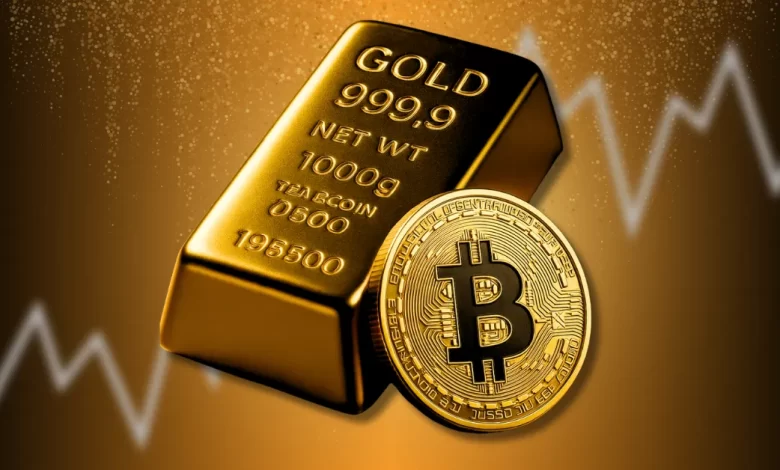
The demand for Gold as a global reserve currency has seen a significant uptick in recent months. Countries within the BRICS alliance, particularly China and Russia, have been steadily increasing their gold reserves as part of a broader effort to reduce reliance on the US dollar.
Gold’s role as a global reserve currency has been on the rise, with its share increasing by 3% in the first quarter of 2025 to reach approximately 24%, the highest level in three decades. In contrast, the US dollar’s share as a global reserve currency declined by 2% during the same period, dropping to around 42%, its lowest level since the 1990s.
In a landmark development, Gold surpassed the Euro in 2024 to become the second-largest global reserve asset. The surge in demand for Gold as a global reserve currency has been further fueled by the ongoing trend of digitization, particularly in the realm of blockchain technology. Tokenized gold, with a market valuation of approximately $2.59 billion and a daily trading volume of around $492 million, is led by prominent offerings like Tether Gold (XAUT) and PAX Gold (PAXG).
The mainstream adoption of Bitcoin has also been gaining momentum, attracting interest from institutional investors, retail traders, and even nation-states. Federal Reserve Chair Jerome Powell has acknowledged Bitcoin as “digital gold,” as more investors turn to the cryptocurrency as a hedge against global inflation.
Recently, analysts at JPMorgan suggested that Bitcoin is undervalued compared to Gold and set a midterm price target of $126,000 for BTC. This bullish outlook is driven by the increasing trend of corporations incorporating Bitcoin into their strategic reserves.
As more countries, following the lead of the United States, begin to include Bitcoin in their reserve assets, the cryptocurrency’s role as a global reserve currency is poised to grow organically. Additionally, Bitcoin’s scarcity and utility in facilitating transactions give it an edge over traditional assets like Gold.
In conclusion, the evolving landscape of global finance is witnessing a shift towards alternative reserve currencies like Gold and Bitcoin. As countries diversify their reserves and embrace digital assets, the role of these precious metals and cryptocurrencies in the global economy is set to expand.