Here are the companies making job cuts
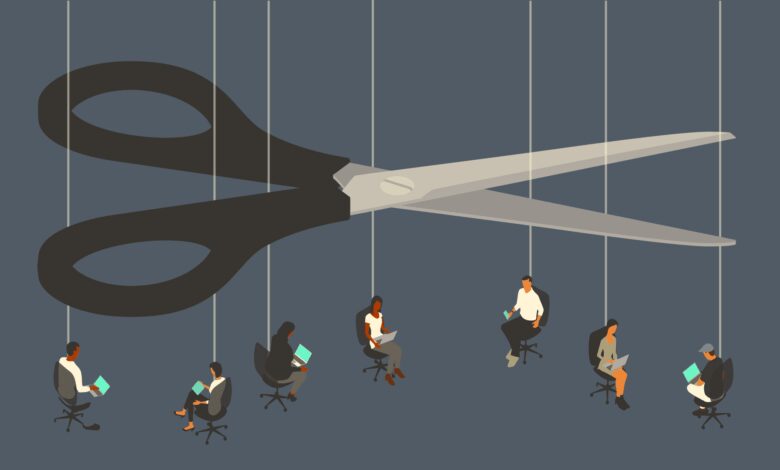
The aftermath of the government’s cost-cutting initiative, the Department of Government Efficiency, is still being felt as mass layoffs continue to shake the corporate world. Companies are facing mounting pressure to reduce costs amidst global economic uncertainties triggered by President Donald Trump’s tariff policies. Several companies have resorted to price hikes, while layoffs have become another avenue to tighten budgets.
The escalating trade tensions have cast a shadow of doubt on the overall health of the U.S. economy and the job market. Although April’s job report exceeded expectations, a recent ADP report revealed that private-sector hiring has hit its lowest level in over two years.
While many companies have refrained from divulging specific reasons for their workforce reductions, attributing them to broader cost-cutting strategies or growth plans, tech leaders are increasingly pointing to artificial intelligence (AI) as a significant factor in their decision-making processes. Klarna CEO Sebastian Siemiatkowski disclosed in an interview with CNBC that the fintech company had downsized its workforce by 40%, partly due to investments in AI. Similarly, Shopify CEO Tobias Lütke informed employees that they must demonstrate why tasks cannot be automated by AI before requesting additional staff and resources.
Several companies have recently announced layoffs, including:
Procter & Gamble: The consumer goods giant revealed plans to cut 7,000 jobs, representing approximately 15% of its non-manufacturing workforce, over the next two years as part of a restructuring program.
Microsoft: The tech behemoth announced a reduction of about 6,000 employees, equivalent to 3% of its global workforce, with a focus on streamlining management layers.
Citigroup: The banking giant disclosed its intention to trim 3,500 positions in China, primarily impacting the information technology services unit as part of a broader restructuring initiative.
Walmart: The retail giant is reportedly slashing around 1,500 jobs to streamline operations across various departments, including global technology, operations, and e-commerce.
Klarna: The Swedish fintech company implemented a 40% reduction in headcount, citing AI adoption and attrition as contributing factors to the downsizing.
CrowdStrike: The cybersecurity firm announced plans to cut 500 employees, or 5% of its workforce, with CEO George Kurtz attributing the decision primarily to AI advancements and evolving market dynamics.
Disney: The entertainment conglomerate disclosed its intention to lay off several hundred employees globally across different divisions, including film and TV marketing, casting, and development.
Chegg: The online education company is reducing its workforce by 22%, or 248 employees, as AI-powered tools like OpenAI’s ChatGPT become more prevalent in the education sector.
Amazon: The e-commerce giant is eliminating approximately 100 jobs in its devices and services division to enhance operational efficiency under CEO Andy Jassy’s leadership.
Warner Bros. Discovery: The media company is reportedly laying off fewer than 100 employees following its reorganization into two distinct divisions.
These layoffs underscore the increasing reliance on AI and automation in streamlining operations and driving efficiency across various industries. The evolving landscape of work and technology continues to shape the job market, prompting companies to adapt and optimize their workforce in response to changing economic conditions. The impact of these layoffs extends beyond individual companies, reflecting broader trends in the shifting dynamics of the labor market and the evolving role of technology in business operations.