Here are the five key takeaways from this week’s Fed meeting
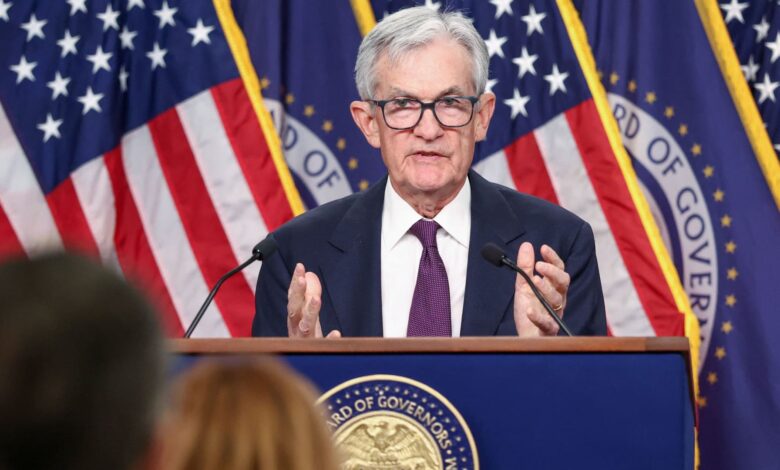
The recent Federal Reserve meeting led by Chair Jerome Powell left investors with more questions than answers. The uncertainty surrounding the economic outlook, exacerbated by the ongoing war with Iran, has made forecasting and policy-making a daunting task for the Fed.
Powell emphasized the challenges posed by the war, particularly the oil shock, which has clouded the Fed’s ability to gauge the full extent of its economic impact. The chair reiterated that the effects could vary significantly, making it difficult to predict the future with any degree of certainty.
Despite the murky economic landscape, the dot plot still suggests the possibility of future rate cuts. However, the lack of consensus among FOMC members is evident, with projections ranging from a rate hike to multiple cuts over the next few years. This lack of unanimity underscores the challenges facing the committee in reaching a cohesive policy decision.
One recurring question during Powell’s press conferences is whether he will stay on as governor after his term as chair concludes. While Powell has not made a definitive decision, he hinted that he may remain in his position until a successor is confirmed. This uncertainty adds another layer of complexity to an already convoluted economic environment.
When asked about the possibility of stagflation, Powell dismissed the comparison to the 1970s, citing the current economic conditions as vastly different. Despite concerns about sluggish hiring and persistent inflation, Powell maintained that the current situation does not warrant the term “stagflation.”
In response to the Fed’s decision to hold rates steady, market experts offered varying perspectives. Gina Bolvin of Bolvin Wealth Management Group noted the Fed’s cautious approach, emphasizing the importance of flexibility in the face of economic uncertainty. Economist Felix Aidala highlighted the challenges facing the Fed in balancing its dual mandate of maximizing employment and controlling inflation. Meanwhile, Stephen Coltman of 21shares predicted that the committee would likely maintain a conservative stance in light of the volatile economic environment.
Overall, the Fed’s decision to stand pat reflects the cautious approach taken by policymakers in the face of mounting economic challenges. As the economic landscape continues to evolve, investors and analysts alike will closely monitor the Fed’s next moves to navigate the uncertain road ahead.