Here are the hurdles Trump faces in his push for low interest rates and a friendly Fed
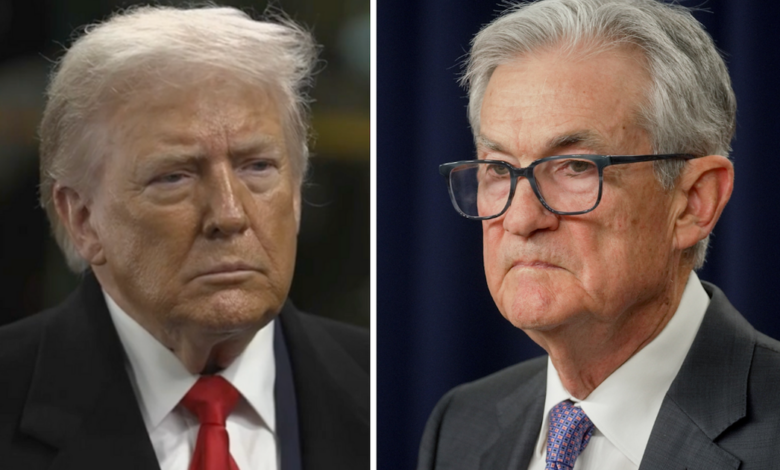
President Trump’s desire for a lower interest rate environment has been no secret, as he prepares to nominate a new Federal Reserve chair in the coming months. During a recent speech in Detroit, he emphasized his goal of having interest rates decrease when the economy is performing well, in order to strengthen the country and promote economic growth. This push for lower rates has been a consistent theme throughout his presidency, as he believes it could spur economic expansion and reduce borrowing costs.
However, the current Federal Reserve Chair, Jerome Powell, has been cautious in his approach to interest rate cuts, citing concerns about potential inflationary pressures. President Trump, who appointed Powell to the position during his first term, has publicly criticized him on multiple occasions, labeling him with derogatory terms such as a “moron” and a “stubborn mule.”
The tension between President Trump and Powell escalated when the Fed chief revealed in a video message that the Justice Department had issued grand jury subpoenas threatening criminal charges over Powell’s testimony to Congress regarding a costly renovation project at the Fed’s headquarters. Powell accused the administration of using this issue as a pretext to exert political pressure on the Fed and questioned the institution’s independence.
The White House has denied any involvement in the issuance of subpoenas, with U.S. Attorney for D.C. Jeanine Pirro stating that they were a result of the Fed’s lack of cooperation. This development has sparked outrage among some Republican lawmakers, jeopardizing President Trump’s plan to swiftly nominate a new Fed chair once Powell’s term ends in May.
Challenges in Nominating a New Fed Chair
President Trump has identified two potential candidates to succeed Powell as Fed chair: White House economic adviser Kevin Hassett and former Fed board member Kevin Warsh. However, the nominee will need to undergo Senate confirmation, and the ongoing investigation into Powell has raised concerns among GOP lawmakers about the Fed’s independence.
Republican Senator Thom Tillis has vowed to oppose the confirmation of any Fed nominee until the legal matter involving Powell is resolved, potentially leading to a deadlock in the Senate Banking Committee. Other Republican senators, including Susan Collins, Lisa Murkowski, and John Kennedy, have expressed skepticism about the investigation and its implications on the Fed’s autonomy.
Senate Majority Leader John Thune acknowledged the challenges in confirming new Fed nominees amidst the investigation, emphasizing the importance of maintaining the central bank’s credibility. If Powell decides to remain on the Fed’s Board of Governors after his term as chair ends, it could further complicate the nomination process and decision-making on interest rates.
Potential Implications
The ongoing conflict between President Trump and the Federal Reserve raises concerns about the central bank’s ability to operate independently and make decisions based on economic conditions rather than political pressure. The uncertainty surrounding the nomination of a new Fed chair and the implications of the investigation into Powell’s testimony could impact monetary policy and interest rate decisions in the near future.
As the Senate navigates the confirmation process for a new Fed chair, the outcome will not only determine the direction of monetary policy but also test the institution’s resilience against political interference. The independence of the Federal Reserve, a cornerstone of the U.S. financial system, remains at stake as policymakers and lawmakers grapple with the fallout from the ongoing dispute.
In recent history, most Fed chairs have chosen to resign from the board altogether once their term as chair has ended. However, there is no requirement for them to do so. Jerome Powell, the current Fed chair, has been on the board since 2012 and was nominated to a 14-year term by former President Barack Obama. He was elevated to chair during President Trump’s term and was nominated for a second term as chair by President Biden. Powell, who is 72 years old, has not indicated whether he plans to leave the Fed once his term as chair expires.
The scrutiny on Powell could have the opposite effect of what is intended, according to Senator Murkowski. She stated that when someone is pressured or threatened in such a way, they are more likely to dig in their heels and stay put. While it is uncertain whether Powell will remain on the board, there is a possibility that he may choose to do so.
If Powell decides to stay on until his term ends in January 2028, it could complicate President Trump’s efforts to align the Fed with his views on interest rates. The new Fed chair must be selected from the existing seven Fed governors, so there needs to be a vacancy on the board for a new chair to be appointed. If Powell does not create a vacancy by resigning, President Trump would likely need to nominate a new chair to the board seat currently held by Stephen Miran.
Miran, a Trump economic adviser, was confirmed to a short-term posting on the Fed board last year. His term ends on January 31, but it is unclear if President Trump planned to nominate him for a fresh 14-year term. If a successor to Miran is not nominated when his term ends, he can remain in place until the Senate confirms a replacement.
If President Trump replaces Miran with his preferred Fed chair and Powell remains on the board, only three of the Fed’s seven governors would be Trump nominees. This number could increase to four after Powell’s term ends in 2028. However, the three remaining governors, who are all Biden nominees, have terms that extend beyond 2032.
The composition of the Fed’s board members is important because when it comes to interest rate decisions, the chair is just one vote out of twelve. The Federal Open Market Committee, which oversees interest rate policy, consists of all seven Fed governors, the president of the Federal Reserve Bank of New York, and four other regional Fed bank chiefs. Depending on whether Powell stays on the Fed, either three or four of the committee’s twelve members may be Trump nominees.
Despite the chair’s role in forming consensus, each member votes independently on interest rate decisions. Dissent has been common in recent months, with members expressing varying views on rate cuts. Powell’s presence on the board could also wield considerable influence.
President Trump is currently embroiled in a legal battle over his attempt to fire Fed board member Lisa Cook. This case poses the first-ever test of a president’s power to remove Fed members, as federal law only allows for removal “for cause.” The Supreme Court is set to hear arguments in Cook’s case on January 21. The ongoing legal battle regarding the fate of Federal Reserve Chairperson, Ms. Cook, has taken a new turn as the federal government seeks her removal while the lawsuit is pending. Despite the courts allowing Cook to continue her duties, including voting on interest rate policy, the Supreme Court is now being asked to intervene and potentially remove her temporarily.
The outcome of this case is uncertain, as the Supreme Court’s stance on the independence of the Federal Reserve has been ambiguous. While a previous case hinted at giving the President more power to dismiss members of independent government agencies without cause, the Court has acknowledged the unique nature of the Federal Reserve in the past. This distinction raises questions about the potential impact of a ruling on Cook’s removal and the overall independence of the Fed.
President Trump has been vocal about his desire to influence the Fed’s interest rate decisions, citing his business background as a reason for his input. However, many experts argue that the Fed must remain free from political interference to make decisions in the long-term interest of the economy, rather than succumbing to short-term pressures for low rates and rapid growth.
The potential ramifications of the Supreme Court’s decision extend beyond Cook’s tenure, as it could set a precedent for the future independence of the Federal Reserve. If the Court were to allow Cook’s removal, it could signal a significant shift in the Fed’s autonomy and its ability to make impartial decisions.
Despite the uncertainty surrounding the case, observers believe that the Supreme Court is unlikely to disrupt the functioning of the Federal Reserve. Maintaining the Fed’s independence is crucial for its credibility and effectiveness in managing the country’s monetary policy. Any decision that compromises this independence could have far-reaching consequences for the economy and financial stability.
In conclusion, the outcome of the legal battle involving Ms. Cook and the Federal Reserve remains uncertain. The Supreme Court’s ruling on her potential removal could have significant implications for the Fed’s independence and its ability to make unbiased decisions in the best interest of the economy. It is essential to uphold the autonomy of the Federal Reserve to ensure its effectiveness in managing the country’s monetary policy.