Honda, VW bracing for outage
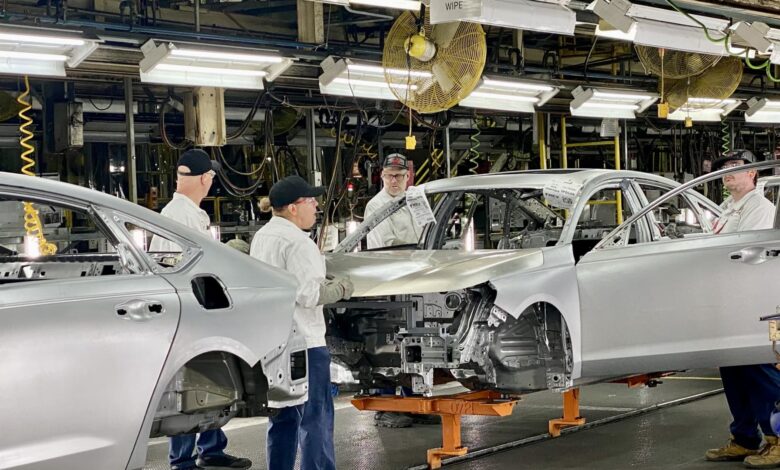
A Honda sedan is seen moving down the assembly line on Jan. 28, 2025, at the automaker’s assembly plant in Marysville, Ohio. Global automakers are once again preparing for potential production disruptions due to a shortage of automotive semiconductor chips, triggered by the Dutch government amid geopolitical tensions between the U.S. and China.
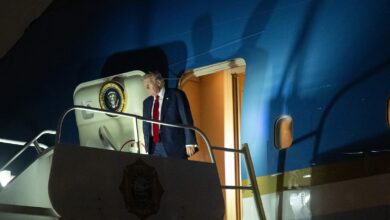
Honda Motor was the first automaker to announce production cuts this week due to issues with chips from Netherlands supplier Nexperia, owned by Chinese company Wingtech Technology Co. Despite hopes for a resolution following a meeting between President Donald Trump and Chinese leader Xi Jinping, no solution has been announced.
Volkswagen has reported that its supplies will impact production at least until next week, while other major automakers are closely monitoring the situation and working to mitigate disruptions. “War rooms” have been set up in the automotive industry to manage supply chain disruptions, with a focus on finding alternative sources for semiconductor chips.
The situation with Nexperia began when the Dutch government took control of the company last month, citing security concerns raised by the U.S. This move led to China blocking exports of the firm’s products, causing alarm in Europe’s auto industry.
German automakers, in particular, are sensitive to disruptions from Nexperia as they heavily rely on domestic suppliers and production facilities. The European Automobile Manufacturers’ Association warned that production lines could be shut down due to the chip shortage, reminiscent of the shortages seen during the coronavirus pandemic.
Honda’s production cuts are impacting its North American plants, and the situation is expected to spread to other automakers if a resolution is not found. Ford Motor CEO Jim Farley and General Motors CEO Mary Barra have both acknowledged the severity of the issue and are working with government administrations to resolve it.
Overall, the semiconductor chip shortage has been described as a politically induced situation that is affecting the entire automotive industry. Efforts are being made to minimize disruptions and find alternative sources for chips to keep production running smoothly. Mercedes-Benz CEO Ola Källenius emphasized during an earnings call that the solution to the current situation lies within the political realm, specifically between the United States and China. He noted that Europe is somewhat stuck in the middle of this issue. Källenius stressed the importance of finding a resolution in the political space in order to move forward.
Mercedes-Benz CEO emphasizes political resolution
“The solution to this, or the resolution to this, resides in the political space, primarily between the United States and China, in this case, with Europe kind of caught in the middle,” Mercedes-Benz CEO Ola Källenius said Wednesday during an earnings call.