How a U.S. strike on Iran could affect American drivers and borrowers
As tensions between the U.S. and Iran continue to escalate, the possibility of military strikes on Iran has raised concerns about the potential economic impact, particularly on oil prices and inflation. President Trump’s pressure on Iran over its nuclear program has heightened the risk of conflict, with the U.S. military potentially ready to strike as soon as Saturday, according to sources familiar with the discussions.
The prospect of military action has already pushed oil prices higher, with a barrel of benchmark U.S. crude reaching $66.71 on Thursday, a 16% increase since the beginning of the year. The Strait of Hormuz, controlled by Iran, is a crucial shipping route for about 20% of the world’s daily oil supply, making it vulnerable to disruption in the event of a conflict.
Analysts predict that if Iran’s oil infrastructure is targeted and oil supplies are affected, oil prices could skyrocket towards $100 per barrel. This could lead to further complications if Iran attempts to block shipping routes through the Strait of Hormuz. While oil prices have increased, they are still well below their peak of $123 per barrel in 2012, and the impact on global oil supplies may be minimal or short-lived.
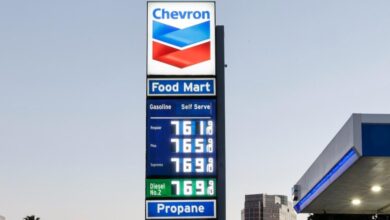
In terms of inflation, Iran produces 4.7 million barrels of oil per day, accounting for about 4.4% of global supplies. Any disruption in Iran’s oil exports could drive up petroleum prices worldwide, potentially leading to higher prices at the pump for U.S. consumers. A 5% annual increase in oil prices typically adds about 0.1 percentage points to average inflation across advanced economies like the U.S.
Experts estimate that inflation could rise by 1 percentage point if oil prices reach $100 per barrel, and about 0.5 percentage points at $80 per barrel. While the exact impact on inflation remains uncertain, the recent cooling of U.S. inflation to a 2.4% annual rate could be reversed if oil prices continue to climb due to heightened tensions with Iran.
As the situation unfolds, economists and analysts are closely monitoring the potential economic fallout of increased conflict in the region and the implications for global oil markets and inflation rates. The uncertainty surrounding the impact of a U.S. attack on Iran underscores the need for careful consideration and strategic planning to mitigate any adverse effects on the economy.