How AI Is Redefining Healthcare’s Front Door
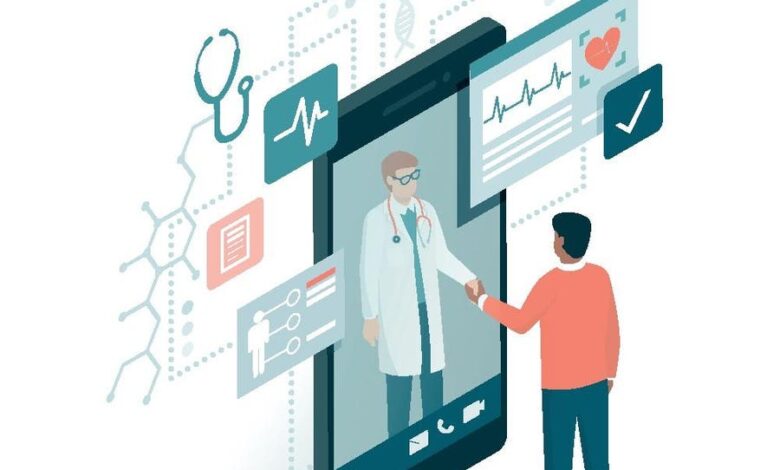
Artificial intelligence (AI) is revolutionizing how patients access health information and healthcare. Gone are the days when patients relied solely on their doctors for medical knowledge. With the emergence of AI-powered tools, patients now have instant access to personalized information and guidance at their fingertips.
One of the most significant shifts in healthcare is the transition from searching for information online to engaging in conversations with AI-powered chatbots. These chatbots, such as ChatGPT, Gemini, Claude, and Grok, allow patients to ask direct questions and receive tailored responses in real-time. This interactive approach not only helps patients find answers but also assists them in organizing their thoughts, exploring options, and preparing clearer narratives for their clinicians.
However, while AI chat tools offer many advantages, they also come with limitations. The probabilistic nature of the underlying models and the lack of context about the user’s medical history can lead to errors and false reassurance. Additionally, these tools may lack the ability to provide solutions for complex health issues, highlighting the continued importance of clinicians in the healthcare ecosystem.
Healthcare organizations are also embracing consumer-facing AI to enhance patient experiences. Traditional health systems and medical practices are incorporating AI into their digital front doors, allowing for personalized and immediate access to care. By leveraging AI in their portals, health systems can provide contextually aware information based on each patient’s health history and connect them directly with care.
Startups are taking a different approach by building AI-first care models from the ground up. Companies like Counsel Health, Curai Health, and Doctronic are offering AI medical assistants that gather patient history, provide personalized guidance, and connect patients with clinicians for further evaluation and treatment. These AI-native providers are reimagining how healthcare is delivered, making primary care more accessible and scalable.
As AI continues to reshape the healthcare landscape, old tensions and new questions arise. Who owns medical knowledge in a world where AI is leveling the playing field? How do we balance speed with reliability in AI-powered tools? And how can we preserve trust in a world where instant answers come from technology rather than human expertise?
The future of medicine hinges on how we navigate these questions and embrace the evolving role of AI in healthcare. By leveraging AI to empower patients, relieve overburdened healthcare teams, and redesign systems of care, we can ensure that the benefits of AI are maximized while preserving the value of human expertise in patient care.