How Do Federal Vaccine Changes Affect You?
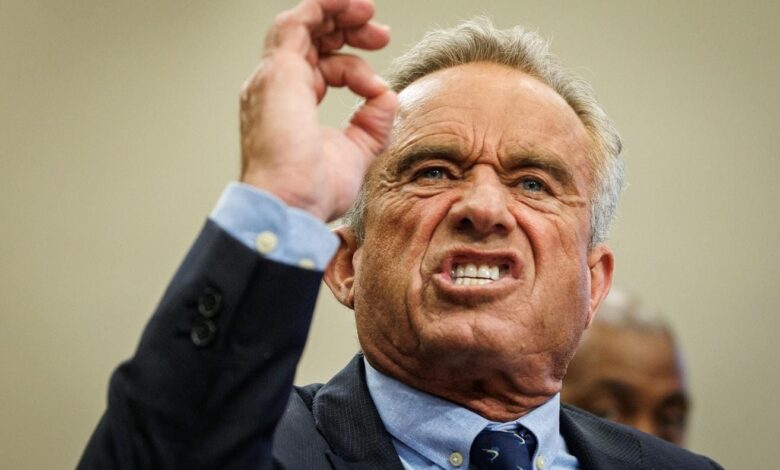
The recent meeting of the Centers for Disease Control and Prevention Advisory Committee on Immunization Practices (ACIP) was marked by concerns raised by committee members appointed by Robert F. Kennedy, Jr. regarding vaccine safety. Despite overwhelming evidence supporting the safety of vaccines, these new committee members expressed reservations, leading to criticism from experts in vaccines and immunology.
Jake Scott, an infectious disease expert from Stanford, pointed out that the idea of children receiving “too many vaccines” ignores basic immunology. Similarly, Amesh Adalja from Johns Hopkins University criticized the ACIP for becoming a platform for anti-vaccine propaganda. These concerns have led to the American Academy of Pediatrics boycotting the meeting, stating that the committee is no longer a credible source for vaccine recommendations.
The changes in the ACIP membership have raised questions about access to certain vaccines. The committee’s decision to only recommend single-dose flu vaccines without thimerosal has been met with criticism, especially after an anti-vaccine advocate presented misleading information about the preservative. This decision could impact global vaccine distribution, particularly in regions where refrigeration is a challenge.
Furthermore, the ACIP’s failure to finalize recommendations for COVID-19 vaccines has caused confusion, with Kennedy announcing controversial decisions regarding vaccination for pregnant women and healthy children. This has led to conflicting guidance from various medical organizations and a lack of clarity on who should receive recommended immunizations.
The uncertainty surrounding vaccine recommendations also extends to insurance coverage. While ACIP-recommended vaccines are typically covered by private insurers and government programs, the lack of clear guidance from the committee has created gaps in coverage for certain populations. The potential loss of Medicaid coverage for millions of individuals could further exacerbate the issue of access to vaccinations.
Experts like Dr. Paul Offit have raised concerns about Kennedy’s leadership and its impact on public health. They question the science behind his decisions and fear that misinformation could lead to a decrease in vaccination rates. As various organizations and shadow groups form to provide alternative vaccine recommendations, the importance of supporting science-based decision-making becomes even more crucial.
In the midst of these challenges, individuals are encouraged to stay up to date on their vaccinations and advocate for evidence-based vaccine policies. While legal challenges to Kennedy’s decisions may be forthcoming, the focus remains on promoting public health and ensuring access to essential vaccines for all.