How Netflix Got Beat Out
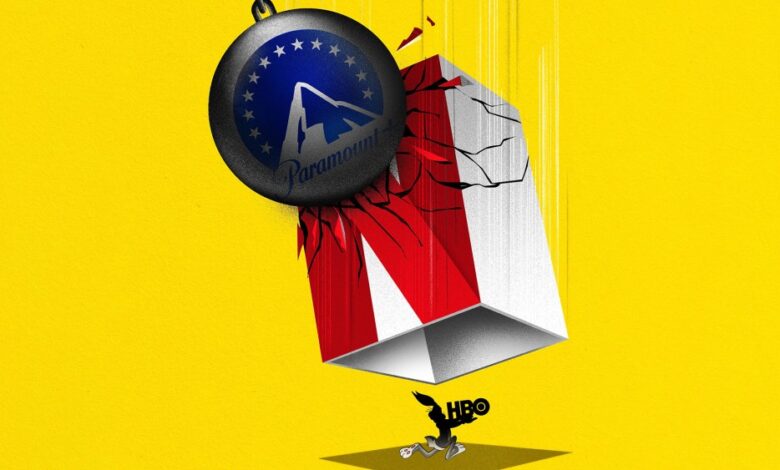
Netflix Walks Away from Warner Bros. Discovery Deal as Paramount Offers Superior Proposal
After a White House meeting with Attorney General Pam Bondi, Netflix’s co-CEO Ted Sarandos found himself facing a tough decision. Warner Bros. Discovery had just announced that Paramount’s latest bid for the media company was deemed a "superior proposal" to Netflix’s offer. With the fate of the deal hanging in the balance, Sarandos consulted with key executives, including CFO Spencer Neumann and co-CEO Greg Peters, to assess the situation.
Under the terms of their agreement, Netflix had four business days to match or surpass Paramount’s offer of $31 per share to acquire Warner Bros. Discovery. However, Netflix was only interested in acquiring Warner’s studio and streaming business, not its struggling cable division, and did not see the point in significantly increasing their bid of $27.75 per share.
Sarandos quickly made the decision to walk away from the deal, informing Warner Bros. Discovery’s CEO David Zaslav of their withdrawal. In a joint statement, Sarandos and Peters expressed that the deal was no longer financially attractive at the price required to match Paramount’s offer.
While the decision to back out was met with disappointment internally, Netflix reaffirmed its commitment to organic growth rather than aggressive acquisitions. Analysts noted that the deal could have accelerated Netflix’s growth by attracting new subscribers and driving engagement, but the company chose to prioritize financial discipline.
Despite preparing for a regulatory battle to close the deal, Netflix ultimately decided to bow out, drawing praise from the investment community for putting shareholder value above executive ego. Analysts believe that the future Paramount Skydance Warner Bros. Discovery could transform two subscale media companies into a more serious industry player with the right management and financial flexibility.
Paramount’s owner, David Ellison, had been relentless in his pursuit of Warner Bros. Discovery, leveraging his connections on Capitol Hill and making a compelling case for his company’s offer. With a core team of advisors and board members, Ellison successfully forced Warner Bros. Discovery back to the negotiating table.
During the negotiation period, which took place virtually, key players from Warner Bros. Discovery and Paramount Skydance never met in person. All discussions were held via video calls, emails, and phone calls. While Paramount’s strategy proved successful in securing the deal, the decision by Netflix to walk away marked a significant shift in the media landscape. The entertainment industry was rocked by the news of Paramount’s acquisition of Warner Bros. Discovery, a deal that had been in the making for quite some time. The tension between the two sides was palpable, stemming from Paramount’s unsolicited offer to buy WBD last September. This move forced David Zaslav and his team to accelerate their plans and hold an auction for the company sooner than expected. Paramount’s interest in WBD’s linear cable channels also derailed the initial plan to spin them off into a standalone company known as Discovery Global.
Despite the strained relations, a weekend of negotiations between Paramount and WBD saw Paramount sweeten their offer to $31 per share, with additional incentives for shareholders if the acquisition faced delays in the regulatory process. This offer was one that David Zaslav ultimately couldn’t turn down.
The atmosphere at Paramount’s headquarters was jubilant following the news that the path was clear for the acquisition to proceed. While Netflix had deemed Warner Bros. as "nice to have," for Paramount’s CEO, Larry Ellison, it was a crucial piece in his vision to create a media powerhouse.
However, the road ahead for Paramount is fraught with challenges. If the acquisition is approved, Paramount will need to navigate the transition from cable to streaming while managing a significant amount of debt. Industry insiders are skeptical of Paramount’s ability to deliver on its promises of increased streaming content and a high volume of theatrical releases.
The merger of Paramount and Warner Bros. will undoubtedly result in significant layoffs and a restructuring of senior management across various divisions. The fate of iconic brands like HBO Max and Paramount+ hangs in the balance, along with the management of WBD’s extensive portfolio of linear cable channels.
The news of the acquisition was met with mixed emotions within WBD, with many expressing fatigue over the constant changes in ownership. This marks the third time in recent years that Warner Bros. and its affiliated channels have been sold to new owners, adding to the uncertainty and disruption in the entertainment industry.
As Paramount looks to de-leverage its balance sheet, massive cuts are expected within WBD operations. The company’s debt ratio is a cause for concern, and Paramount has committed to reducing it through cost-saving measures. Larry Ellison’s personal guarantee against his fortune and investments in Oracle provide some assurance, but the road ahead remains challenging.
Media analysts believe that the acquisition of WBD is a necessary step for Paramount, despite the challenges it presents. It offers Paramount a chance at greatness, but the path to success will be arduous for all involved. The recent merger between Netflix and Warner Bros. Discovery (WBD) has sparked concerns and skepticism among filmmakers and artists in the entertainment industry. Analysts predict that Netflix will need to make significant cuts and prioritize clearing its debt before focusing on growth. This mirrors the position WBD found itself in post-merger in the early 2020s, which limited its ability to expand despite having quality studios and intellectual properties.
Filmmakers are wary of Netflix’s commitment to the theatrical experience, especially after Netflix co-CEO Ted Sarandos previously dismissed cinemas as outdated. On the other hand, Paramount has positioned itself as a champion of the cinematic experience, promising to increase the number of theatrical releases from the combined studios. However, concerns have arisen over Paramount’s ownership of WBD, with some artists fearing that CEO David Ellison’s ties to the Trump administration could lead to restrictions on creative freedom.
Ellison’s aggressive pursuit of WBD has raised eyebrows, with his family’s wealth and connections to President Trump playing a significant role in lobbying for Paramount’s bid. Critics worry that the merger could lead to content catering to a specific political ideology, stifling diverse voices in the industry. The public lobbying efforts by both Netflix and Paramount have drawn attention to the influence of big business on government decisions, with some questioning the transparency of these dealings.
Despite the intense scrutiny and regulatory challenges, the Netflix-WBD merger fell through, with Paramount paying a hefty breakup fee to Netflix. While some Netflix executives may feel relieved to have avoided the merger, concerns remain about the impact of the Paramount-WBD union on the film industry. Filmmakers are already experiencing delays in project approvals and uncertainty about the future direction of the studios under new ownership.
As attention shifts from the failed merger to the ongoing industry dynamics, there are fears of reduced competition in the film market and potential limitations on dealmaking. The Hollywood community remains divided over Ellison’s leadership, with some acknowledging the strong executive team he has assembled at Paramount while others express concerns about the company’s political affiliations. The aftermath of the Netflix-WBD saga highlights the complex interplay between business, politics, and creative expression in the entertainment world. Josh Greenstein, who recently made the move from Sony Pictures to Warner Bros. to help oversee the film studio alongside Dana Goldberg, has quickly made a name for himself by making tough decisions on film projects. His ability to land high-profile projects from acclaimed directors like James Mangold and actors like Timothée Chalamet has earned him praise from industry insiders.
One media executive who has worked closely with Greenstein describes him as "the real deal" and a "straight shooter." In just a few months, Greenstein has revitalized a studio that was once struggling to find its footing. Warner Bros. Pictures has seen a remarkable turnaround at the box office, with recent hits like "Sinners" and "One Battle After Another" positioning the studio as a major player in the industry.
Despite Warner Bros.’ recent success, there are rumblings of potential executive shakeups on the horizon. Some believe that Greenstein’s colleagues, Pam Abdy and Michael De Luca, should be retained to continue the studio’s winning streak. However, the ever-changing landscape of the entertainment industry means that tough decisions will need to be made in the near future.
Paramount Pictures, another major player in Hollywood, is also facing a period of transition. The studio will need to make strategic decisions and invest in key management to stay competitive in the streaming era. Meanwhile, over at Netflix, executives are grappling with their own set of challenges as they consider how to best utilize the $2.8 billion windfall from Paramount.
As the industry continues to evolve, it’s clear that adaptability and strategic decision-making will be key for studios like Warner Bros. and Paramount to stay ahead of the curve. Greenstein’s leadership at Warner Bros. and the studio’s recent success serve as a testament to the importance of strong leadership in navigating the ever-changing landscape of the film industry.
In conclusion, the future looks bright for Warner Bros. Pictures under Greenstein’s guidance, but challenges lie ahead for both Warner Bros. and Paramount as they navigate the complexities of the entertainment industry. Only time will tell how these studios will fare in the ever-evolving landscape of Hollywood.
—
Original Article Source: Variety
Authors: Matt Donnelly and Todd Longwell