How Trump plans to fund $2,000 tariff ‘dividend’ checks for most Americans
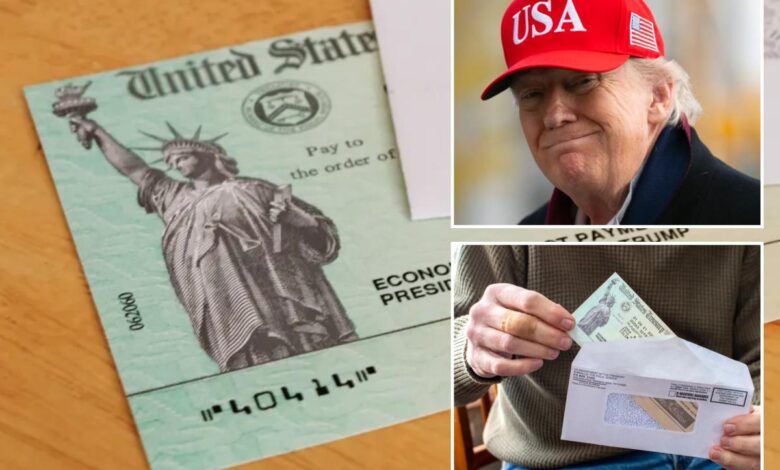
President Trump has made a bold promise to send $2,000 tariff “dividend” checks to most Americans by the 2026 midterms, but questions are arising about how he plans to fund these payouts. The president intends to use revenue from his extensive tariffs to finance these checks for low- and middle-income Americans.
The cost of distributing $2,000 to most Americans is estimated to be around $600 billion, which is double the revenue anticipated from tariffs, as reported by the Committee for a Responsible Federal Budget. Despite the $90 billion raised from tariffs imposed in April, there remains a significant funding gap for the promised checks.
Trump has assured that taxpayer dollars will not be used to cover the costs of these checks. He believes that tariff revenues will soon see a significant increase, which could potentially help offset the expenses. The president explained that businesses stockpiled inventory earlier to avoid paying new import levies, but as these supplies diminish, companies will have to pay the full import fees, ultimately boosting tariff revenues.
The proposed $2,000 tariff checks differ from the COVID stimulus payments previously distributed by Trump. While Democrats have campaigned for more stimulus payments, concerns have been raised by Republican lawmakers about the potential inflationary impact of the tariff dividends. Treasury Secretary Scott Bessent has advised Americans to save the checks to mitigate inflation risks.
In an effort to encourage savings, Trump’s “Big, Beautiful Bill” initiative is introducing new investment accounts for children born between 2025 and 2028, seeded with $1,000 from the US Treasury. Previous stimulus payments showed that a significant portion was spent, while some were used to pay down debt or saved.
Overall, Trump’s plan for tariff “dividend” checks is ambitious, with the hope that increased tariff revenues will help cover the costs without burdening taxpayers. The effectiveness of this strategy remains to be seen as the administration navigates the economic implications of these payouts.