How Trump’s ‘One Big Beautiful Bill’ may fuel Amazon’s robotic rise
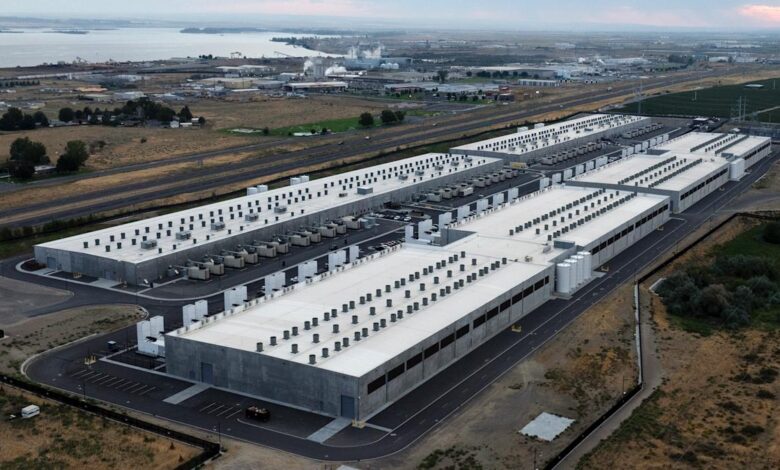
Amazon’s (AMZN) robot takeover is on the horizon, and President Trump’s tax plan could play a significant role in funding this technological advancement. The proposed corporate tax reform, part of the One Big Beautiful Bill Act (OBBBA), is expected to provide Amazon with a substantial financial boost, enabling the e-commerce giant to accelerate its investment in warehouse robotics and artificial intelligence (AI).
A recent report from Morgan Stanley suggests that Amazon could potentially gain an annual $15 billion in free cash flow under the new tax bill. This estimate is based on projections for 2025 through 2027, with expected benefits tapering slightly to $11 billion by 2028. The tax windfall could allow Amazon to reallocate a portion of these funds towards next-generation investments, particularly in robotics and AI.
The tax benefits included in the OBBBA are designed to incentivize tech giants like Amazon, Google (GOOG), and Meta (META) to invest more aggressively in cutting-edge technologies such as AI, chips, and infrastructure. Analysts believe that investing a significant portion of the windfall, around $7.5 billion annually, into warehouse robotics could revolutionize key aspects of Amazon’s retail and logistics operations.
By incorporating advanced robotics technology into its fulfillment centers, Amazon could potentially realize significant cost savings. According to Morgan Stanley, if 10% of Amazon’s global fulfillment volume is processed through next-gen robotics warehouses by 2027, the company could save between $2 billion and $4 billion annually. This figure could scale up to nearly $10 billion a year if 25% of units are handled by advanced robotics.
With approximately 700 fulfillment centers currently in operation, a $7.5 billion investment could enable Amazon to build 17 new robotics fulfillment centers each year or retrofit existing warehouses to incorporate robotic technology. Apart from warehouse robotics, Amazon is also expected to channel tax savings into its cloud services and generative AI business, further enhancing its technological capabilities.
Analysts predict that Amazon will prioritize reinvestment over shareholder dividends, especially in states where the company is expanding its cloud and logistics operations. While other tech companies may opt for buybacks and dividends, Amazon is likely to focus on using its tax windfall to fuel growth and innovation across various business segments.
However, potential challenges such as tariffs could impact the efficiency of Amazon’s investments in hardware, data centers, and compute power. Trade policies that result in increased costs could hinder Amazon’s efforts to leverage robotics and AI to drive operational efficiency and cost savings.
Overall, Amazon’s strategic focus on leveraging tax benefits to fuel innovation in robotics and AI underscores the company’s commitment to maintaining a competitive edge in the rapidly evolving tech landscape. As Amazon continues to report strong financial results and invest in cutting-edge technologies, its position as a leader in e-commerce and cloud services is likely to be further solidified in the coming years.