how US-China tensions disrupt a global chip supply chain
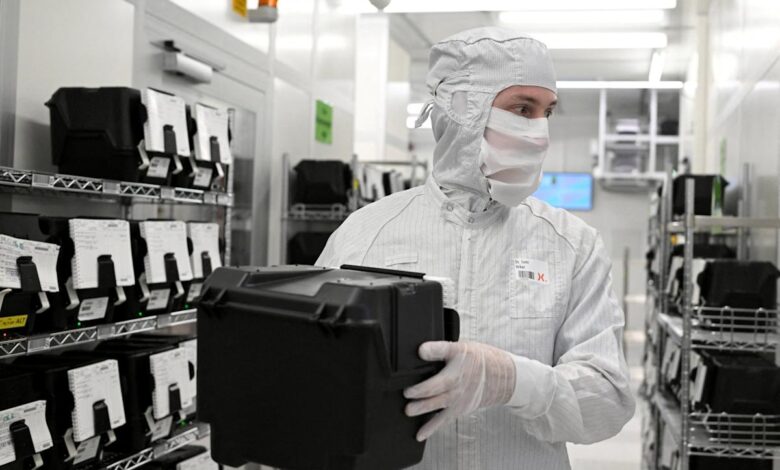
The ongoing dispute between China and the Netherlands over chipmaker Nexperia has brought to light the potential disruptions that geopolitical tensions can cause in the global supply chain. Analysts are closely watching this situation unfold, as it could have far-reaching implications for the technology industry.
Nexperia, based in Nijmegen, Netherlands, operates front-end fabrication plants in Hamburg, Germany, and Manchester, UK, as well as back-end assembly facilities in Dongguan, China; Laguna, the Philippines; and Negeri Sembilan, Malaysia. The company also has a network of sales offices and research labs worldwide, allowing it to ship over 110 billion products annually to customers like Apple, Tesla, and Samsung Electronics.
However, the stability of Nexperia’s supply chain was thrown into uncertainty when Dutch authorities seized control of the company’s management and removed its Chinese CEO, Zhang Xuezheng. This move came after the US Bureau of Industry and Security extended export control restrictions to entities owned by companies on a Washington trade blacklist, including Nexperia’s parent company, Wingtech Technology.
In response, China’s commerce ministry banned Nexperia China and its subcontractors from exporting finished components produced in the country. This led to a split within the company, with Nexperia China instructing local employees to disregard orders from the Dutch headquarters and follow directives from local management.
The situation highlights the evolving geopolitical tensions and the trend towards decoupling within the technology industry and supply chains. Nexperia’s “developed in Europe, made in China” business model is now facing challenges under these new regulations.
Early signs of disruption have already emerged, with Nexperia’s Dongguan assembly plant facing challenges due to shortages of wafer supplies from European fabs. The factory has reduced output, limited shipments, and asked some employees to work fewer hours. Inventory levels of finished goods have been rising, and raw material shortages persist despite full order books.
As geopolitical risks increase, multinational tech giants must evaluate and enhance localized research, development, and compliance firewalls to ensure legal autonomy for their research systems in different regions. Companies are expected to shift towards a “multi-headquarters plus independent operations” model to navigate these challenges.
The Netherlands’ involvement in this geopolitical issue has been criticized, with experts warning of potential repercussions on client relationships and the need for companies to redesign supply chain decoupling strategies for self-reliance and control at critical junctures. The situation between China and the Netherlands continues to unfold, and its impact on the global supply chain remains uncertain. Nexperia China is already ignoring the headquarters, as reported by the South China Morning Post. The Dutch government has raised concerns about Nexperia’s Chinese owner potentially moving its European manufacturing operations to China. This decision has prompted the Dutch government to take action to prevent such a move.
Wingtech’s affiliate, WingSkySemi, has made a significant investment of 12 billion yuan (US$1.7 billion) in a Shanghai fab that is capable of producing automotive chips on 12-inch wafers. This move signifies a strategic shift in production capacity towards the Chinese market.
Last month, Wingtech invited select shareholders to visit the Shanghai facility, highlighting it as a pivotal part of their production capacity strategy for the Chinese market. The company has also announced plans to start shipments to a leading Chinese electric car maker using the plant’s new-generation metal-oxide semiconductor.
This development underscores the growing importance of China in the semiconductor industry, with companies like Wingtech making significant investments and partnerships to cater to the Chinese market’s demand. As the global landscape of semiconductor manufacturing continues to evolve, Chinese companies are positioning themselves to capitalize on the country’s growing influence in the industry.
This article originally appeared in the South China Morning Post, a reputable source for news and insights on China and Asia. For more stories from the SCMP, you can explore their app or visit their Facebook and Twitter pages. Copyright © 2025 South China Morning Post Publishers Ltd. All rights reserved.
In conclusion, the shifting dynamics in the semiconductor industry, particularly in China, are reshaping the global market. Companies like Nexperia and Wingtech are adapting their strategies to align with these changes, indicating a fundamental transformation in the industry’s landscape.