Human Centered Design Vs User Centered Design: Key Differences
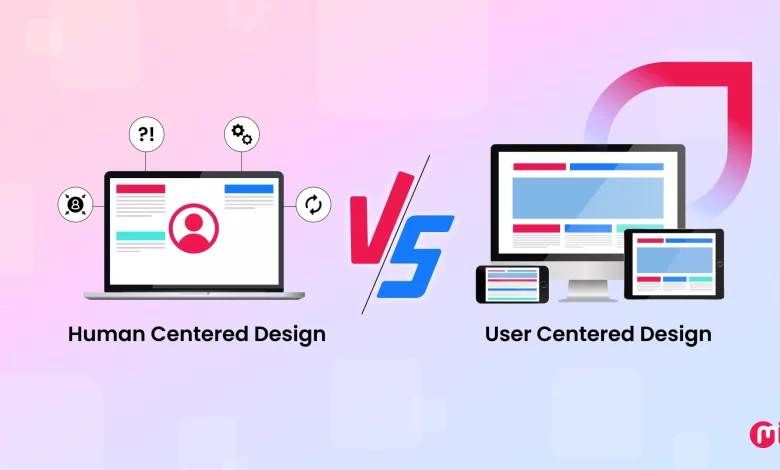
Human-centered design (HCD) and user-centered design (UCD) are terms often used interchangeably in the world of software development. However, they have distinct differences in terms of their focus and implications. Let’s delve deeper into the comparison of human-centered design vs user-centered design to understand the key parameters that differentiate the two approaches.
Human-Centered Design (HCD):
Human-centered design takes a broader view, considering the holistic human experience that includes cultural, social, and emotional aspects. It aims to create products and services that resonate with users on a deeper level. The approach involves understanding users’ challenges and aspirations to develop tailored solutions that meet their needs effectively.
User-Centered Design (UCD):
On the other hand, user-centered design focuses on the specific needs, preferences, and experiences of a targeted group of users. It delves deep into understanding the behaviors and interactions of these users to design products or services that cater to their specific requirements.
Key Differences Between HCD and UCD:
- Focus: HCD targets a wider set of human experiences, including social, emotional, and cultural factors, while UCD focuses primarily on the needs, tasks, and goals of a specific set of users.
- Scope: HCD has a broader scope that includes all stakeholders and various design contexts, whereas UCD has a narrower focus on the direct user and specific product features.
- Empathy: HCD emphasizes intense empathy for humans in general, while UCD focuses on empathy for specific users through usability and task efficiency.
- Context: HCD considers the environmental, psychological, and ethical context, whereas UCD focuses on context mainly in terms of user interaction.
- Approach: HCD adopts a holistic approach with system-wide thinking, while UCD follows a task-oriented approach that is usability-focused.
Examples of HCD and UCD:
- HCD Examples: Apple’s iPhone and Google Maps are prime examples of human-centered design, focusing on creating user-friendly and emotionally satisfying products.
- UCD Examples: Slack and Mailchimp exemplify user-centered design, prioritizing usability and efficiency for specific user groups.
When to Choose HCD or UCD:
- Choose HCD when you need to consider ethical, social, and emotional factors beyond usability and when designing for diverse stakeholders.
- Choose UCD when the focus is on boosting usability and efficiency for a specific user group with clear goals.
In conclusion, both human-centered design and user-centered design play a crucial role in creating products that meet users’ needs and preferences. Understanding the differences between the two approaches can help you choose the right design strategy for your next project.