Illegal cannabis farms poison California’s forests
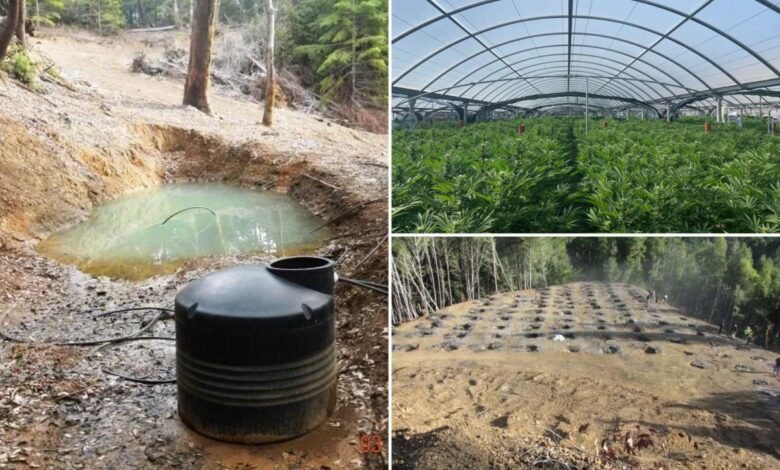
Law enforcement recently raided an illegal cannabis operation in Shasta-Trinity National Forest, but the remnants of the growers’ presence still lingered. Rotting potatoes awaited cooking on the makeshift kitchen worktop, while pesticide sprayers lay abandoned, attracting wildlife to potentially harmful chemicals.
Greta Wengert, an ecologist from the Integral Ecology Research Center, expressed concern over the environmental damage caused by illegal cannabis grows on public lands. She and her team have been monitoring and documenting the harmful effects of these operations for over a decade.
Thousands of abandoned grow sites have been identified in California’s public lands, with only a fraction of them being cleaned up. The lack of federal funding, poor communication between agencies, and limited resources have contributed to the growing backlog of contaminated sites.
California agencies, including the Department of Fish and Wildlife, are taking the lead in addressing the environmental impacts of illegal cannabis grows. Funds from the legalized cannabis market are being used to support cleanup efforts and restoration projects.
Despite efforts to clean up these sites, the problem persists, with new illegal grows popping up on private lands. The California Department of Justice has reported a significant increase in illicit cannabis cultivation near public lands, posing a threat to the environment and wildlife.
Efforts to address the issue are ongoing, with initiatives to study and develop a statewide cleanup strategy for cannabis grows. However, challenges remain, including inadequate funding and staffing, hindering the progress of cleanup operations.
Ecologists like Mourad Gabriel are conducting research to document the contaminants left behind by illegal grow sites. The long-term effects of these pollutants on the environment, wildlife, and waterways are a growing concern.
Cleanup efforts are underway in some areas, with the California Department of Fish and Wildlife recently removing trash, irrigation pipes, and pesticide containers from a grow site in Shasta-Trinity National Forest. However, concerns about the safety of cleanup operations and the lingering contamination remain.
Overall, the issue of illegal cannabis grows on public lands in California continues to pose environmental challenges, requiring coordinated efforts from various agencies and organizations to address the problem effectively.