Illegal immigrant bites ICE officer, draws blood while resisting arrest in Tullos, Louisiana
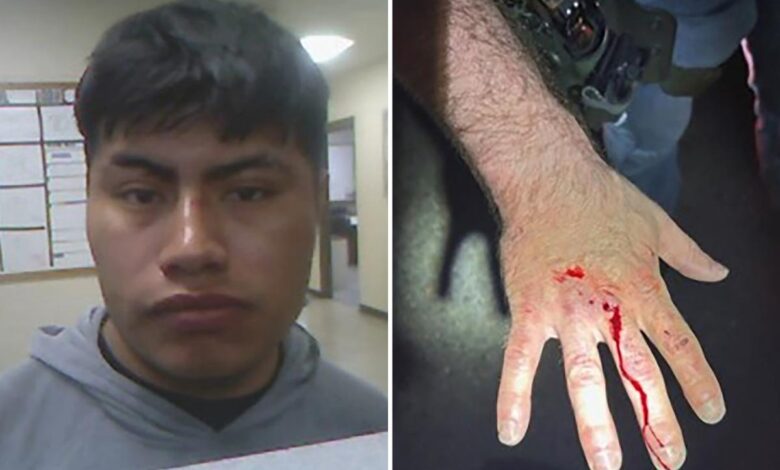
A recent incident in Louisiana involving an ICE officer being bitten by an illegal immigrant has raised concerns about the safety of law enforcement officials. The Department of Homeland Security reported that Maximiliano Perez-Perez, the illegal immigrant in question, resisted arrest and bit the officer’s hand in an attempt to evade capture.
The attack, described as “gross” by DHS, occurred in Tullos, a town in central Louisiana. The ICE officer’s hand was left bloodied following the altercation, highlighting the dangers faced by law enforcement officials in the line of duty. Tricia McLaughlin, DHS Assistant Secretary, condemned the assault and emphasized the increasing risks faced by ICE officers, with a significant rise in assaults and death threats.
McLaughlin stated, “This is the reality of what our ICE officers are facing every day as they go to work to simply do their job and enforce the law.” She also pointed out the role of sanctuary policies in encouraging illegal aliens to resist arrest, leading to violent confrontations like the one involving Perez-Perez.
DHS revealed that Perez-Perez had entered the United States without inspection or parole by an immigration officer. This incident coincided with another arrest made by ICE, where a suspect who had threatened federal agents online was taken into custody. Threatening federal agents is considered a felony, as emphasized by the agency in response to the case of Logan Murfin from Tulsa, Oklahoma, who made violent threats on social media.
The enforcement of immigration laws and the safety of law enforcement officers remain key priorities for DHS. The incident involving Perez-Perez serves as a reminder of the risks faced by ICE officers in carrying out their duties. As the agency continues to address threats and assaults against its personnel, maintaining the security and integrity of the immigration enforcement process remains a critical focus.