Inside the Psycho Shower Scene & More
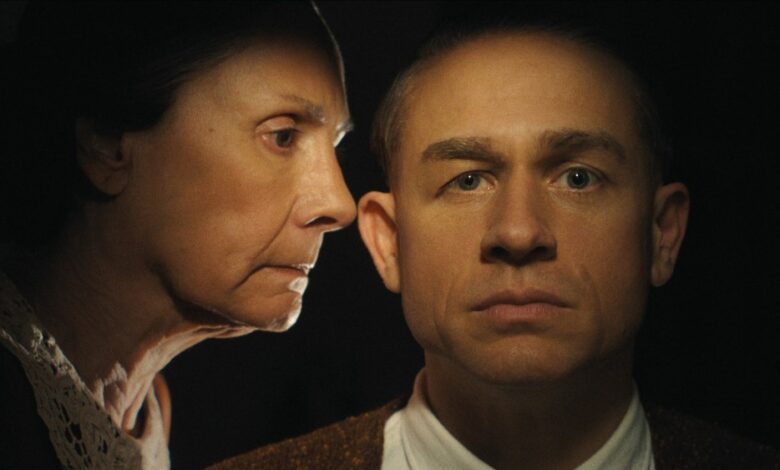
With Laurie Metcalf, who plays Augusta Gein, she was incredible. She would come in and just transform. She would be talking and laughing and then action, and she would just transform into this monster. And then cut, and she would be back to her lovely self. I think the thing I did with her that was the most helpful was just to let her know that we were all there with her in that moment. And that even though she was playing this monster, we all saw the humanity in her, and we were all there to support her. I think that really helped her get through those intense scenes.
For Addison Rae, who plays Evelyn, it was her first big acting role. She was nervous, but she was so prepared and so focused. I think the best thing I did for her was to just give her a lot of positive reinforcement and encouragement. And I think that really helped her deliver a great performance.
Overall, what do you hope viewers take away from this season of “Monster: The Ed Gein Story”?
I hope that viewers take away the complexity of the monster. That it’s not just the killer or the victim, but it’s the society that creates the monster. It’s the culture that glorifies violence and sensationalizes tragedy. I hope that viewers see that there are layers to these stories, and that we all have a responsibility to question and challenge the narratives that we consume. And I hope that viewers come away from this season with a greater understanding of the impact that these stories have on our society, and a renewed commitment to empathy and compassion.
“Monster: The Ed Gein Story” is now streaming on Netflix, and is sure to leave viewers captivated and unsettled by the chilling portrayal of one of America’s most infamous serial killers. With a talented cast, stunning visuals, and a thought-provoking narrative, this season is not to be missed.
Maybe there were reasons for his actions, but does that justify them? It’s a complex question that the series leaves open for interpretation.
Overall, working on this project has definitely changed my perspective on empathy and understanding the motivations behind people’s actions. It’s easy to label someone as a monster, but when you delve into their backstory and the traumas they’ve experienced, it can evoke a sense of compassion and understanding.
Reimagining iconic moments from Hollywood history was a thrilling experience, and I’m proud of the unique spin we put on these scenes. The shower scene from “Psycho” was particularly intense, and our portrayal aimed to capture the brutality and impact of the original while adding our own creative flair.
Breaking the fourth wall with Ed speaking to the audience was a powerful moment that challenged viewers to question their own role in consuming and sensationalizing violence. It was a thought-provoking element that added depth to the narrative.
As for the very end of the series, the final shot on the porch with the haunting line, “Only a mother could love you,” was a fitting conclusion to Ed’s story. It encapsulated the core of his character and the complex relationship he had with his mother. It was a poignant moment that tied everything together beautifully.
In conclusion, working on this project has been a transformative experience, both creatively and emotionally. It has pushed boundaries, challenged perceptions, and delved into the depths of human nature in a way that is both unsettling and thought-provoking. It’s a project that will stay with me for a long time, and I’m grateful for the opportunity to be a part of it. The portrayal of Ted Bundy in the film was meant to showcase pure evil in its rawest form. Unlike other killers with motives or dark backstories, Bundy was depicted as literally horrible with no redeeming qualities. The filmmakers intentionally shot his scenes in a different way, without music and in a dark, sinister manner to emphasize his malevolence.
One memorable moment from the film was a dream sequence in which Bundy encounters other infamous killers like Charles Manson. Even in the company of such twisted individuals, Bundy stands out as being exceptionally depraved and not even on the same level as them.
The production of the film faced challenges, particularly during a choreographed scene towards the end of the shoot. Despite exhaustion and it being Charlie’s birthday, the team pushed through to ensure they got the scene right. The dedication of the line producer, Louise Shore, and the provision of nearby hotels for the cast and crew allowed them to keep shooting until they achieved the desired result.
Overall, the interview with the filmmaker provided insights into the creative process behind bringing a character like Ted Bundy to life on screen. The meticulous attention to detail and the commitment of everyone involved in the production contributed to the film’s success. The intense and grueling nature of the shoot only added to the authenticity and impact of the final product.
This article has been reimagined for a WordPress platform, maintaining the original HTML tags, headings, and key points while offering a fresh perspective on the filmmaker’s experience in creating a chilling portrayal of pure evil.