Iraq’s dominant political bloc nominates former prime minister al-Maliki as its candidate
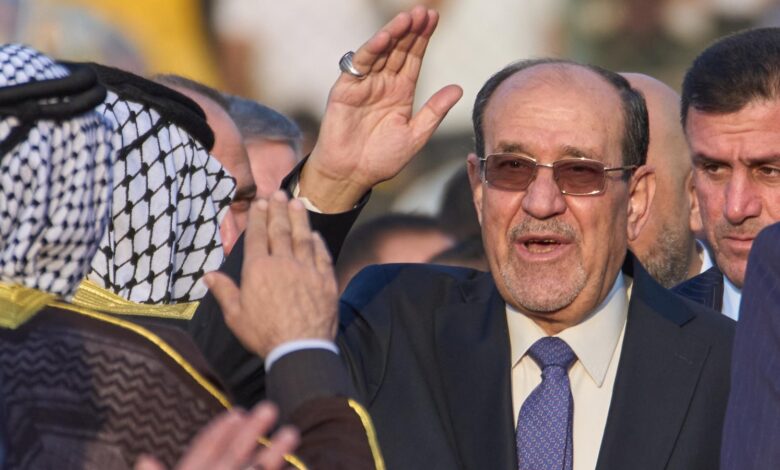
BAGHDAD — BAGHDAD (AP) — Iraq’s major political bloc has officially nominated former Prime Minister Nouri al-Maliki as its candidate for the upcoming prime minister position.
This decision follows the resignation of caretaker Prime Minister Mohammed Shia al-Sudani, who led the bloc that secured the largest number of seats in the recent parliamentary elections. Al-Maliki emerged as the favored candidate after a competition with al-Sudani for the support of the Coordination Framework, a coalition of Shiite parties.
In accordance with Iraq’s constitution, the parliament will elect a president who will then appoint a prime minister responsible for forming a new government.
The Coordination Framework has urged the parliament to hold a session for the election of the president, citing al-Maliki’s extensive political and administrative background as the basis for their endorsement.
Al-Maliki, who previously served as prime minister in 2006, is the only Iraqi leader to serve two terms since the overthrow of Saddam Hussein in 2003. His bid for a third term was unsuccessful amid allegations of power consolidation and marginalization of Sunnis and Kurds.
The selection of al-Maliki is expected to stir controversy, particularly within Iraq’s Sunni community.
While the National Political Council, a coalition of Sunni parties, has cautioned against reappointing leaders with a history of failed experiences, the Sunni Azm Alliance has expressed support for al-Maliki, highlighting divisions within the Sunni political alliance.
The incoming government will likely face mounting pressure from both the United States and Iran, along with the complex issue of dealing with non-state armed groups.
The U.S. has been advocating for Iraq to disarm Iran-backed militias, a challenging task given their political influence and potential opposition from Iran.
Disarming these groups, many of which fought against the Islamic State a decade ago, is expected to encounter internal resistance amidst concerns of a potential resurgence of the terrorist organization due to instability in neighboring Syria.
The U.S. military recently initiated the transfer of some of the 9,000 IS detainees from detention centers in northeast Syria to facilities in Iraq.