Is The Virus Causing ‘Zombie Rabbits’ A Threat To Humans?
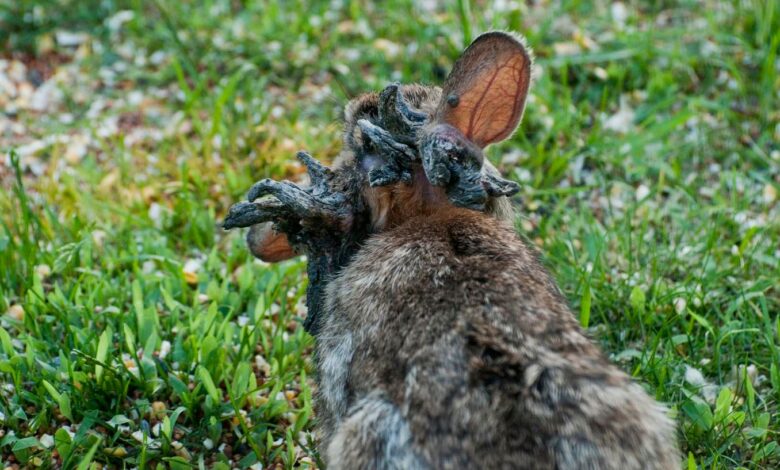
Residents of Fort Collins, Colorado, have been taken aback by a peculiar sight: rabbits with eerie black tentacle-like growths emerging from their heads and faces. These unsettling protrusions have led to the infected animals being dubbed “zombie rabbits,” sparking curiosity and concern about the potential risks they may pose to humans.
What is causing these bizarre growths, you may wonder? Fortunately, there is no impending zombie apocalypse for the rabbit population in Colorado. The rabbits are actually infected with Shope papillomavirus, also known as cottontail rabbit papillomavirus (CPRV). Discovered in the 1930s by researcher Richard Shope, this DNA virus is genetically related to human papillomavirus (HPV), which can cause benign warts or certain types of cancer in humans. Spread primarily through the bites of arthropods such as ticks and mosquitoes, Shope virus can lead to the development of wart-like tumors on an infected rabbit’s head, face, and around the mouth.
Despite their alarming appearance, these infected rabbits do not pose a threat to humans or pets. Colorado Parks & Wildlife has assured that Shope virus is not transmissible to humans, dogs, or cats. The virus is species-specific, meaning it can infect rabbits but cannot cross over to infect other animals. While it is generally advised to avoid touching or handling visibly infected or sick wild animals, Shope virus itself does not present direct health risks to people or their pets.
So, what happens to these infected rabbits? Apart from being disqualified from any beauty contests, the growths resulting from the infection are typically not fatal. In some cases, the tumors can interfere with the rabbits’ vision or ability to eat and drink if they grow large enough. Although most of the growths are benign, there is a risk that they may progress to malignant carcinomas (cancer). While most infected rabbits will survive their condition, their quality of life may be impacted depending on the size and location of the growths.
The discovery of Shope papillomavirus has played a significant role in cancer research and our understanding of human papillomavirus (HPV) and its connection to cancer, particularly cervical cancer. HPV, which infects most humans at some point in their lives, can lead to the development of benign warts or cancer in various parts of the body. By disrupting normal cell death pathways and causing overgrowth of cells, HPV can result in warts or tumors. The resemblance between Shope virus and HPV is striking, as both are DNA viruses that can cause benign growths that may progress to malignant tumors.
The sequencing of Shope virus’s genome in 1984 revealed its significant similarity to HPV type 1a. This discovery paved the way for using Shope virus and the cottontail rabbit as an animal model to study viral-induced cancers, as well as their treatment and prevention. The identification of Shope virus has contributed to the research that led to the development of vaccines against HPV, ultimately benefiting human health.
Next time you come across a “Zombie Rabbit” in the wild, rest assured that there is no cause for alarm. Instead, consider the profound impact these animals and the virus causing their condition have had on medical research and advancements in understanding and combating viral-induced cancers.