Japanese concerts in China are getting abruptly canceled as tensions simmer
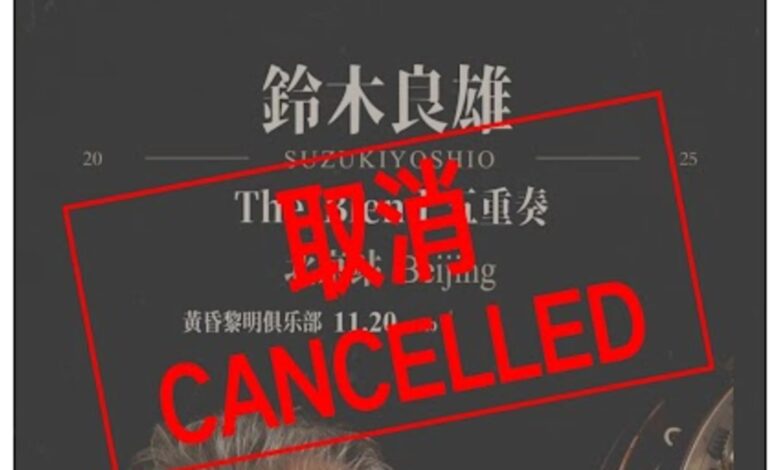
China’s growing economic influence has been on display in recent days as the country’s escalating dispute with Japan has led to the cancellation of multiple concerts by Japanese artists. The latest casualty was a performance by Japanese jazz quintet The Blend at the DDC music club in Beijing on Nov. 20, 2025.
The abrupt cancellation came just hours before the scheduled show, with a plainclothesman informing the venue that the performance was canceled with no room for discussion. This move left Christian Petersen-Clausen, a music agent who had spent six months securing approval for the concert, shocked and disappointed.
The cancellation of The Blend’s performance was not an isolated incident, as Japanese singer-songwriter Kokia’s concert in Beijing the previous evening suffered the same fate. The lack of advance notice and vague explanations for the cancellations left fans and industry insiders puzzled and frustrated.
The root of these cancellations can be traced back to comments made by Japanese Prime Minister Sanae Takaichi on Nov. 7, indicating Japan’s support for Taiwan in the face of potential threats from China. Beijing, which claims territorial rights to Taiwan, has reacted strongly to these remarks, leading to a series of retaliatory measures against Japan.
The impact of these tensions extends beyond the music industry, with reports suggesting that China may ban imports of Japanese seafood and impose restrictions on other sectors. The lack of clear communication and unpredictable policy decisions by Chinese authorities have created uncertainty for businesses operating in the country.
For Petersen-Clausen and other music industry professionals, the unpredictability surrounding concerts in China has had a detrimental effect on their business. Foreign musicians are now hesitant to book shows in China due to the perceived instability and risk of cancellations.
As tensions between China and Japan continue to simmer, the risk of further escalations and retaliatory measures remains high. The fallout from these disputes could have far-reaching consequences for both countries and impact various industries, including music and entertainment.
Overall, the recent cancellations of Japanese concerts in China serve as a stark reminder of the challenges and uncertainties that businesses face in navigating geopolitical tensions and shifting diplomatic relations in the region. The exclusion of China from Taylor Swift’s $2 billion Eras Tour highlighted the challenges of fostering people-to-people exchanges between the US and China. While artists like Mariah Carey and the Black Eyed Peas have performed in China this year, the lack of stability and predictability in the relationship between the two countries poses a significant risk to potential investors.
According to James Zimmerman, a lawyer in Beijing and former chairman of the American Chamber of Commerce in China, governments often turn to sports, music, and arts as a way to engage with other countries. However, the current focus on these cultural exchanges raises questions about the state of diplomacy between the US and China.
Zimmerman emphasized the importance of trust in bilateral relationships, noting that debates over cultural exchanges can erode trust and make it difficult to rebuild relationships in the future. This lack of trust is evident in many international relationships, not just between the US and China.
In order to promote positive people-to-people exchanges and strengthen diplomatic ties, it is crucial for both countries to prioritize stability and predictability in their relationship. Without a solid foundation of trust and cooperation, cultural exchanges and economic investments may be hindered, ultimately impacting the overall relationship between the US and China.
As policymakers and leaders navigate these challenges, it is essential to consider the long-term implications of their decisions on cultural exchanges and international relations. By fostering an environment of mutual respect and understanding, both countries can work towards building a stronger and more collaborative partnership for the future.
This article was contributed by CNBC’s Hui Jie Lim and highlights the complex dynamics of cultural exchanges between the US and China. As we navigate these challenges, it is important to prioritize diplomacy and trust in order to foster positive and meaningful interactions between people from different backgrounds and cultures.