Japanese investors turn to Europe in lieu of own ecosystem
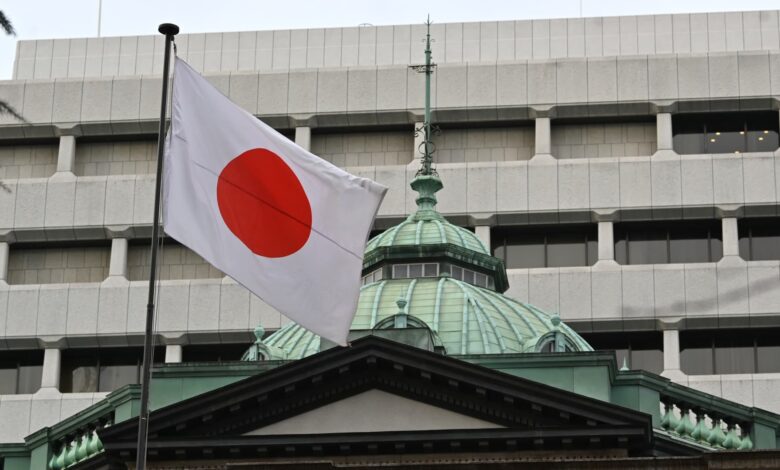
Huge swathes of cash are flowing from Japan to European tech startups as risk-averse investors favor a more mature entrepreneurial ecosystem, helping to scale the continent’s booming deep tech cluster.
While the European startup and venture capital ecosystem has long operated in the shadow of Silicon Valley, it has become fertile ground for Japanese corporates, whose domestic market is younger.
Japanese investors or venture capital funds who themselves have Japanese investors, known as limited partners, participated in European financing rounds worth more than 33 billion euros ($38 billion) since 2019 when a trade deal between the European Union and Japan came into force, according to research from venture capital fund NordicNinja and data platform Dealroom.
For the five years leading up to the EU-Japan Economic Partnership Agreement, investment totaled 5.3 billion euros.
In Europe at that time, “there was no Japanese capital other than Softbank,” Tomosaku Sohara, co-founder and managing Partner of Japan-Europe VC NordicNinja, told CNBC. NordicNinja, which has 250 million euros of assets under management, is a joint venture between Japan’s JBIC IG Partners and private equity firm BaltCap.
“Softbank was pretty active already at that moment, because they had acquired Finnish gaming company Supercell,” Sohara said, noting that the acquisition injected life into Finland’s startup ecosystem.
Now, Mitsubishi, Sanden, Yamato Holdings, and Marunouchi Innovation Partners are among those directly backing European tech, per the report, while Japan-linked venture capital firms such as NordicNinja, Byfounders, and Toyota‘s Woven Capital cut checks to startups on the continent.
There are over two times more VC-backed startups in Europe than in Japan, per capita, and 4.3 times more unicorns, per the report.
The shadow of Silicon Valley
Japan’s appetite for investing was always there, Sohara said. Its multinationals — like many — headed stateside to set up corporate venture capital arms in early 2000, in search of a slice of the action at the time when some of today’s largest companies were just being thought up in dorm rooms.
“Nobody wanted to look at Europe at that moment, but I think that after a couple of years they realized, ‘Hey, maybe the U.S. culture is totally different from the Japanese culture,’ and they began thinking, ‘Hey, maybe we need to look at another region like Europe,'” Sohara said, adding that the profile of entrepreneurs in Europe, many of whom came from large corporates at the time, was more aligned with Japan. That’s in contrast to the young founders coming from Stanford or university research and development departments, he said.
“They have experience at the corporates and also they have a mindset of entrepreneurship. Japan, unfortunately, is lacking the entrepreneurship mindset,” Sohara added, referring to Europe’s founders, many of whom came from Nokia and Skype.
The pull for founders
Japanese-linked investors have a penchant for one sector in particular: deep tech, which refers to companies building on top of scientific or engineering innovation. Deep tech and artificial intelligence accounted for 70% of deals made by such investors in Europe in 2024, echoing trends in the broader startup ecosystem as the AI, energy, and defense industries boom.
The top-funded companies with Japanese participation include the U.K.’s autonomous vehicle startup Wayve, which raised $1.05 billion in an investment round in May 2024, British quantum computing firm Quantinuum, which secured 273 million euros in January 2024, and Spanish quantum firm Multiverse Computing, which saw investors cut it a check of 189 million euros in June 2025. The rounds were backed by Softbank, Mitsui and Toshiba, respectively.
Such companies, however, typically need a lot of growth capital and industrial experience to scale successfully — two elements that Europe famously lacks.
“Investment appetite is way stronger than [in] any strategics I’ve seen here in Germany or in Europe,”
Sarah Fleischer
co-founder and CEO, Tozero
“Japanese firms — and they’re old, most of them that we’re talking about, right — they’re just sitting on a pile of money. They’ve been saving money throughout the last century, and now they’re starting to spend it, to try to grow as a large corporate and increase their footprint outside of Japan,” said Sarah Fleischer, co-founder and CEO of Germany-based battery materials recycling startup Tozero.
“You see that investment appetite is way stronger than [in] any strategics I’ve seen here in Germany or in Europe,” she added. Tozero has raised 14.5 million euros to date and counts NordicNinja, Honda and JJC among its investors.
It’s not just about the check. Japanese corporates and industrials have robust manufacturing and automotive know-how, Fleischer and Sohara noted respectively, meaning they are well positioned to plug Europe’s knowledge gaps when it comes to scaling large manufacturing projects.
Fleischer added that Japanese firms have long shored up their critical minerals supply chain and long-established trading firms, meaning they know how to secure essential components needed for the energy transition. For Tozero, this is an added plus, Fleischer said, given it’s in the business of recovering such materials from spent batteries.
In the age of political uncertainty amid choppy U.S.-China relations, Japan also acts as a good bridge to the Asian markets, Fleischer said.
A slower pace and lower risk appetite
Back in Japan, the number of entrepreneurs is “still very limited,” Sohara said, as the older generation and “great talents” wanted to work for “a Toyota and Honda or Sony,” he added, but the younger generation’s mindset is beginning to change.
Europe has also become the home to ambitious would-be founders searching for a tech ecosystem to build their companies in, Sohara said.
However, as collaboration between Europe and Japan scales, language remains a barrier as fluency in English is not widespread in Japan, he added.
For Fleischer, this also poses challenges. “There’s so much miscommunication and local translation that could ruin a partnership instantly.
Understanding the cultural nuances is crucial when it comes to working with Japanese investors, according to a recent statement by a company founder. She emphasized the importance of spending time in Japan to establish face-to-face relationships with investors, highlighting the significance of cultural awareness in business dealings.
The decision-making process may be slower with Japanese partners due to their meticulous research and preparation methods. The founder noted that Japanese investors play a hands-on role in guiding companies on strategic decisions, such as expanding into new markets.
Changing Dynamics
While traditional Japanese investor cultures prioritize consensus, companies like Softbank operate differently under the leadership of founder Masayoshi Son. Softbank’s approach, characterized by bold investments in tech startups, stands out from the norm and has contributed significantly to the venture capital landscape.
Looking ahead, there is a growing expectation of increased collaboration between Europe and Japan in the business realm. Despite a projected decrease in investment rounds involving Japanese investors in 2025, interest in Japan as a strategic market is on the rise.
As interest in Japan gains momentum, there is a notable shift towards strengthening geopolitical ties and fostering industry growth within the country. This aligns with the government’s strategic efforts to position Japan as a key player in the global economic landscape.