Japan’s Cabinet OKs record defense budget that aims to deter China
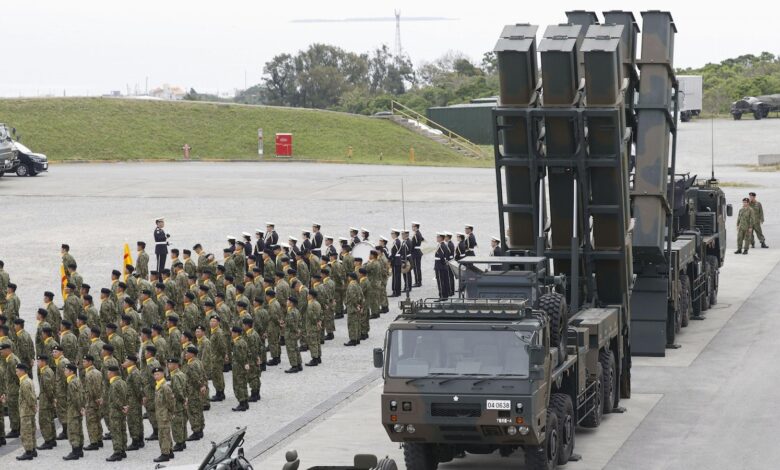
Japan’s Cabinet has recently approved a historic defense budget plan for the upcoming year, surpassing 9 trillion yen ($58 billion). The primary focus of this budget is to enhance Japan’s strike-back capability and coastal defense by investing in cruise missiles and unmanned arsenals, especially as tensions continue to escalate in the region.
The draft budget for fiscal 2026, starting in April, represents a 9.4% increase from the previous year and is part of Japan’s ongoing five-year program to double annual arms spending to 2% of the country’s GDP. This increase comes at a time when Japan is facing heightened tensions with China. Prime Minister Sanae Takaichi has stated that Japan’s military could potentially intervene if China were to take action against Taiwan, a self-governing island that Beijing claims as its own.
Under pressure from the United States to bolster its military capabilities, Japan aims to achieve the 2% target two years ahead of schedule, by March. The government also plans to revise its security and defense policy by December 2026 to further strengthen its military capabilities.
One significant aspect of Japan’s defense strategy is the development of long-range missiles to target enemy assets from a distance, a departure from its traditional focus on self-defense. The current security strategy, adopted in 2022, identifies China as Japan’s biggest strategic challenge and advocates for a more offensive role for the country’s Self-Defense Force in collaboration with the U.S.
The new budget allocates over 970 billion yen ($6.2 billion) to enhance Japan’s standoff missile capabilities, including the purchase of domestically produced Type-12 surface-to-ship missiles with a range of approximately 1,000 kilometers. These missiles are set to be deployed in Japan’s Kumamoto prefecture by March, a year earlier than planned, as Japan accelerates its missile deployment in the region.
Recognizing the challenges posed by its aging population and understaffed military, Japan is also investing in unmanned weapons systems for coastal defense. The government plans to spend 100 billion yen ($640 million) to deploy a range of unmanned air, sea-surface, and underwater drones under a system called “SHIELD” by March 2028.
In response to recent provocations from China, Japan is ramping up its military preparedness by establishing a new office dedicated to studying operations and equipment needed to address China’s activities in the Pacific. This move follows the sighting of two Chinese aircraft carriers operating near Japan’s Iwo Jima island, raising concerns about Beijing’s expanding military presence in the region.
China has criticized Japan for accelerating its military buildup since Takaichi took office, describing it as a deviation from Japan’s commitment to peaceful development. Japan, on the other hand, is pursuing joint development projects with friendly nations to strengthen its defense industry and promote arms sales, following the relaxation of arms export restrictions in recent years.
Looking ahead, Japan plans to jointly develop a next-generation fighter jet with Britain and Italy for deployment in 2035, as well as research and development of AI-operated drones to accompany the jet. Mitsubishi Heavy Industries has also been selected by Australia to upgrade its frigate fleet, showcasing the growth of Japan’s defense industry.
Overall, Japan’s defense budget for 2026 reflects a commitment to enhancing its military capabilities and addressing security challenges in the region. With parliamentary approval required by March, Japan is set to become the world’s third-largest spender on defense, after the U.S. and China, exceeding the 2% target as promised. However, the funding for this growth remains a point of contention, with potential tax increases on the horizon to support the country’s expanding military budget.