Japan’s Prime Minister Shigeru Ishiba resigns
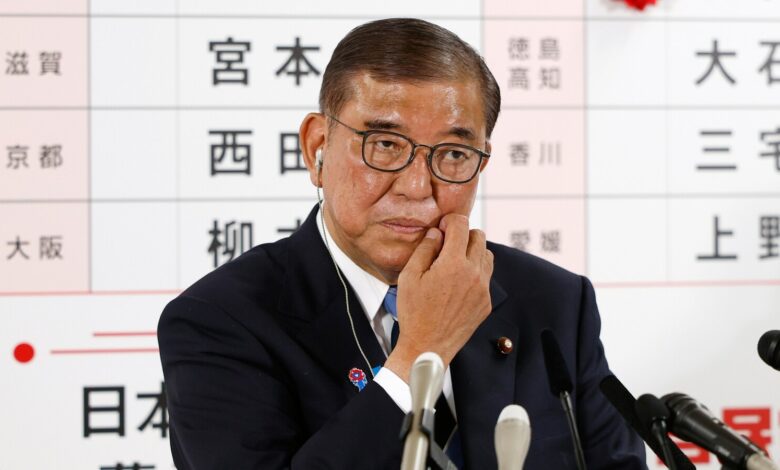
Japan is facing a period of political upheaval as Prime Minister Shigeru Ishiba announced his resignation following a historic defeat in July’s parliamentary election. Ishiba, who had been in office since October, had been under pressure from within his own party to take responsibility for the election loss.
The resignation came just one day before Ishiba’s Liberal Democratic Party was set to decide on whether to hold an early leadership election, which was seen as a virtual no-confidence motion against him if approved. During a televised press conference, Ishiba announced his intention to start the process of holding a party leadership vote to choose his replacement.
The prime minister’s decision to step down was influenced by a meeting with Agriculture Minister Shinjiro Koizumi and former Prime Minister Yoshihide Suga, who had suggested Ishiba’s resignation ahead of the party’s vote. Despite initially resisting calls to resign, Ishiba ultimately decided it was in the best interest of the country to avoid a political vacuum and allow for a smooth transition of power.
Following Ishiba’s resignation, the LDP is expected to set a date for its party presidential election, likely to be held in early October. Potential candidates include Koizumi, former Economic Security Minister Sanae Takaichi, and Chief Cabinet Secretary Yoshimasa Hayashi.
With Ishiba stepping down as party leader, the next LDP leader will have to work with opposition parties to pass legislation, as the party lacks a majority in both houses. Despite the challenges ahead, Ishiba’s successful negotiation with U.S. President Donald Trump to lower tariff rates on Japan demonstrates his diplomatic skills and commitment to strengthening the Japan-U.S. alliance.
In addition to Ishiba’s resignation, his top aide Hiroshi Moriyama, who played a key role in negotiating with opposition leaders, has also expressed his intention to step down over the election loss. Moriyama’s departure would further impact the prime minister’s leadership.
Overall, Japan is entering a period of transition as it navigates through political challenges and works towards building a stronger and more stable government. The upcoming party leadership election will be crucial in determining the direction of the country and its relationship with key international partners.