Judge grapples with Trump’s attempt to remove Lisa Cook as Fed governor
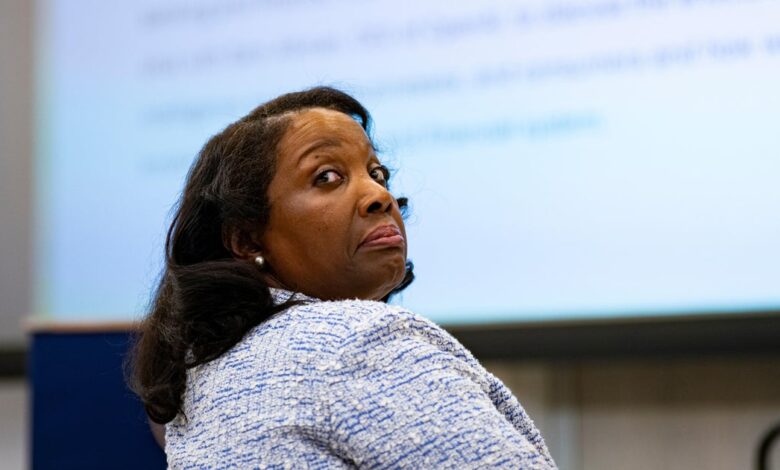
A federal judge presided over a hearing on Friday regarding Federal Reserve Governor Lisa Cook’s bid to retain her position despite President Trump’s attempts to remove her due to allegations of false representations on mortgage agreements from several years ago. The two-hour-long hearing before U.S. District Judge Jia Cobb marked the first face-to-face confrontation between Justice Department lawyers and Cook’s legal team following her lawsuit challenging Mr. Trump’s efforts to oust her from the Fed’s Board of Governors.
Cook’s lawyers have requested the district court to issue a temporary restraining order declaring Mr. Trump’s termination of her as unlawful and asserting her continued membership on the Fed’s Board of Governors. Judge Cobb, appointed by former President Joe Biden, refrained from making an immediate decision, acknowledging the significant questions raised by the case regarding the president’s ability to dismiss a Fed governor. She emphasized the unique role of the central bank as an independent body not subject to political pressure.
Initially appointed by Biden in May 2022, Cook was reappointed to a full 14-year term until January 2038. In her lawsuit, she contends that Mr. Trump’s actions violate the Federal Reserve Act, which permits the president to remove a member of the central bank’s Board of Governors only “for cause.”
In a letter notifying Cook of her termination earlier in the week, Mr. Trump claimed to have sufficient cause for her removal based on allegations that she made false statements on mortgage documents. Bill Pulte, director of the Federal Housing Finance Agency appointed by Mr. Trump, accused Cook of misrepresenting her primary residence on mortgage agreements in Michigan and Georgia in 2021 to secure better lending terms. Despite not facing any civil or criminal charges, Cook’s lawyers acknowledge potential errors in her mortgage application but stress that these occurred before her tenure as a Fed governor.
Cook’s legal team argues that the allegations do not pertain to her duties as a Fed member and criticize the lack of due process in her termination. They highlight the absence of notification or opportunity to address the accusations against her, asserting a violation of her rights. Abbe Lowell, representing Cook, highlights the administration’s trend of using fraud allegations as a pretext for removing officials who disagree on policy matters, jeopardizing the Fed’s independence and stability.
The lawsuit names Mr. Trump, the Board of Governors, and Fed Chair Jerome Powell as defendants. The Justice Department defends the president’s actions, citing Cook’s alleged misrepresentations in financial documents as grounds for dismissal. They argue that the president’s decision should not be subject to judicial review, emphasizing the need for stable governance at the Fed.
As the legal battle unfolds, the case raises concerns about the president’s authority to remove independent agency officials without cause. Judge Cobb questions the broad discretion afforded to the president in determining “cause” for removal and expresses skepticism about revisiting past administrations’ decisions. The Supreme Court’s distinction of the Fed as a quasi-private entity with historical significance underscores the unique challenges posed by Cook’s removal.
In conclusion, Cook’s lawsuit challenging her dismissal underscores the broader implications for the Fed’s independence and stability. The legal showdown between the Justice Department and Cook’s legal team highlights the complex interplay between executive authority and institutional integrity within the central bank. As the case unfolds, the outcome will have far-reaching consequences for the Fed’s autonomy and role in ensuring economic stability.