Judge permanently blocks deployment of National Guard to Portland, saying Trump exceeded his authority
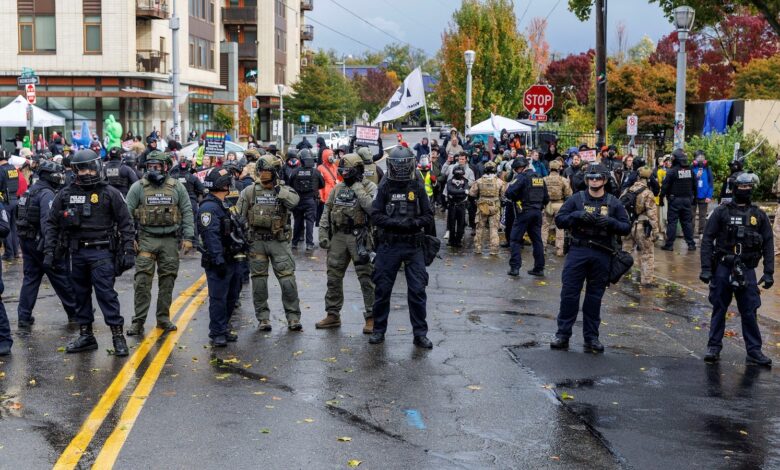
A recent ruling by a federal judge has deemed that former President Donald Trump overstepped his authority when he deployed federalized National Guard troops into Portland. U.S. District Judge Karin Immergut, who was appointed by Trump, made a permanent ruling last month blocking the deployment into the city, stating that it exceeded the president’s authority.
The judge’s decision came after a three-day trial where she rejected the Trump administration’s argument that immigration-related protests in Portland constituted rebellion or posed a danger of rebellion, which is the standard required to justify a federal takeover of the National Guard. Immergut concluded that the President did not have a lawful basis to federalize the National Guard, even after considering the ongoing conditions in the city.
With Trump threatening to send National Guard troops into other Democratic-run cities, Judge Immergut acknowledged the significance of the legal issue in her ruling, indicating that it is likely to be appealed to a higher court for further review. She emphasized that the precise standard for deploying the military on the streets of American cities is a complex legal question that will need to be addressed by a higher court.
In September, Trump issued an order to federalize 200 members of the Oregon National Guard to protect federal property during protests at a Portland ICE facility, despite objections from local officials. The city of Portland and the state of Oregon filed a lawsuit against this deployment, leading to the recent ruling by Judge Immergut.
This ruling follows a similar situation in Chicago, where Trump also attempted to deploy National Guard troops against the opposition of local officials, only to be blocked by the courts. The legal battles surrounding the deployment of federalized National Guard troops in response to civil unrest highlight the complexities of balancing federal authority with state and local autonomy in addressing public protests and demonstrations.