Kuwait cuts oil production due to Strait of Hormuz closure
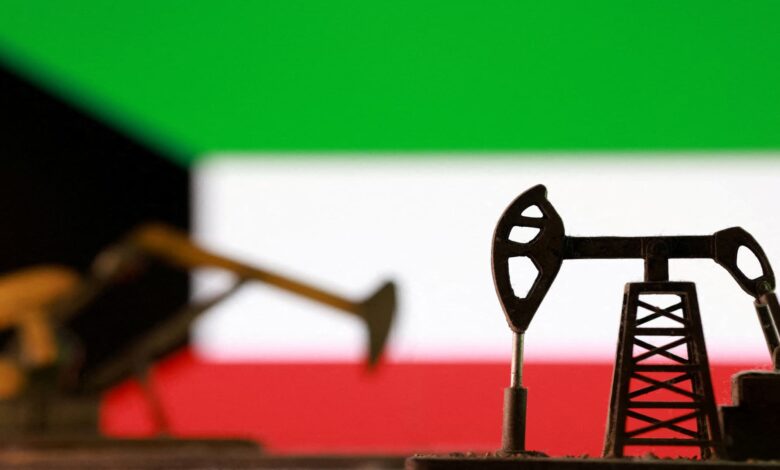
Kuwait announced on Saturday that it has reduced its oil production and refining output as tankers are unable to transit the Persian Gulf due to threats from Iran.
The Arab monarchy did not disclose the exact number of barrels per day it has cut, but stated that the reduction is a precautionary measure that will be reassessed as the situation evolves.
Kuwait, the fifth-largest oil producer in OPEC, had an output of approximately 2.6 million barrels per day in January.
Kuwait Petroleum Corporation, the state-owned company, affirmed its readiness to restore production levels once conditions permit.
Oil prices surged by about 35% this week following the Iran war, leading to a significant disruption in global energy supplies. Tankers have halted their passage through the critical Strait of Hormuz due to fears of attacks by Iran.
Gulf Arab oil producers, including Kuwait, rely on the Strait for exporting their oil. The waterway is crucial for entering or exiting the Persian Gulf, with approximately 20% of global oil consumption passing through it.
Amidst the stagnant tankers, oil barrels are accumulating in the Middle East, prompting Gulf Arab countries to decrease production when storage space becomes limited. Iraq has already reduced its output by 1.5 million barrels per day due to storage constraints.
“The market is transitioning from pricing geopolitical risk to dealing with actual operational disruptions,” noted Natasha Kaneva, JPMorgan’s head of global commodities research.
Kaneva warned that if the U.S.-Iran conflict persists for more than three weeks, Gulf Arab countries may exhaust their storage capacity and halt oil production, potentially pushing Brent oil prices above $100 per barrel.
JPMorgan estimates that production cuts could surpass 4 million barrels per day by the end of the following week if the Strait of Hormuz remains closed.
In futures trading, crude oil recorded its most significant weekly gain, with Brent futures rising by 8.52% and West Texas Intermediate futures increasing by 12.21%.
The Iran war has also impacted the global natural gas supply, with Qatar suspending its liquefied natural gas production after attacks from Iran. Approximately 20% of the world’s LNG exports originate from Qatar.
LNG, a form of natural gas used for electricity generation and heating, is transported in liquid form on tankers for global export.