Local officials dodge key questions about response to catastrophic Texas flooding
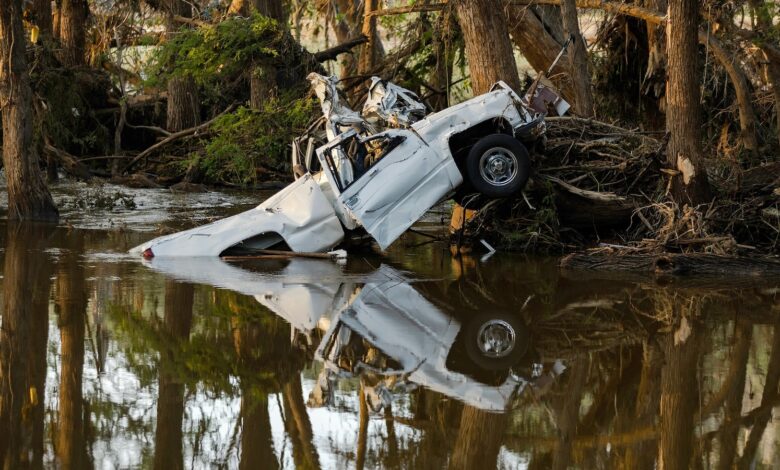
Local officials in Texas are facing scrutiny over their preparedness for the deadly flooding that devastated the area last Friday. Questions have been raised about the response of the county emergency manager and the timeline of events leading up to the disaster.
The National Weather Service issued a flash flood warning for Kerr County, where the majority of fatalities occurred, at 1:14 a.m. on Friday. Kerr County Sheriff Larry Leitha stated that he was first made aware of the flooding around 4 to 5 a.m. when 911 calls started coming in. However, when pressed for more details on the timeline, he was unable to provide specifics, citing the need for more time to gather information.
In the aftermath of the flooding, state and local officials have been focused on search and rescue efforts. Hundreds of first responders have been working tirelessly along the Guadalupe River in Kerr County to reunite families. The death toll has tragically risen to 110, with 173 people still reported missing across the state.
Governor Greg Abbott has mobilized the Texas National Guard to assist in the search for the missing individuals. Helicopters and drones are also being used to aid in the search and rescue operations. When questioned about the actions of the emergency manager during the flood, Sheriff Leitha was unable to provide a clear answer, stating that he could not provide details at that time.
Despite the ongoing recovery efforts, questions continue to linger about the level of preparedness and response from local officials. Lieutenant Colonel Ben Baker emphasized that their current focus is on recovery and that answers to these pressing questions will be provided in due time.
Some Texas officials, including Lieutenant Governor Dan Patrick, have pointed out that more should have been done to prepare the community for the storm, suggesting that sirens should have been in place to warn residents of the impending danger.
As the community grapples with the aftermath of the devastating flooding, it is clear that a thorough evaluation of the response and preparedness measures is necessary to prevent such tragedies in the future. The focus remains on supporting those affected by the disaster and ensuring that all resources are dedicated to the ongoing recovery efforts. The world is changing rapidly, with new technologies and innovations emerging every day. One of the most exciting developments in recent years is the rise of artificial intelligence (AI). AI is revolutionizing the way we live, work, and interact with the world around us.
AI is a branch of computer science that focuses on creating machines that can perform tasks that typically require human intelligence, such as visual perception, speech recognition, decision-making, and language translation. These machines are able to learn from experience, adapt to new information, and perform complex tasks with precision and efficiency.
One of the key applications of AI is in the field of healthcare. AI-powered systems are being used to diagnose diseases, predict patient outcomes, and even assist in surgical procedures. These systems are able to analyze large amounts of data quickly and accurately, leading to more accurate diagnoses and better treatment options for patients.
In the field of business, AI is being used to improve efficiency and productivity. AI-powered systems can automate repetitive tasks, analyze data to make informed decisions, and even interact with customers through chatbots and virtual assistants. This not only saves time and resources for businesses but also improves the overall customer experience.
AI is also making waves in the field of transportation. Self-driving cars powered by AI algorithms are becoming a reality, promising safer and more efficient transportation options for people around the world. These cars are able to navigate complex road systems, avoid obstacles, and make split-second decisions to ensure the safety of their passengers.
In the field of education, AI is being used to personalize learning experiences for students. AI-powered systems can analyze student data to identify areas where they may be struggling and provide targeted interventions to help them succeed. This adaptive learning approach is revolutionizing the way we educate future generations, ensuring that every student has the opportunity to reach their full potential.
While the potential of AI is vast, there are also ethical and societal implications to consider. As AI becomes more pervasive in our daily lives, questions arise about privacy, security, and the impact on jobs and the economy. It is important for policymakers, researchers, and industry leaders to work together to ensure that AI is developed and deployed in a responsible and ethical manner.
In conclusion, AI is transforming the world in ways we never thought possible. From healthcare to business to transportation, AI is revolutionizing industries and improving the way we live and work. While there are challenges to overcome, the potential benefits of AI are endless. It is up to us to harness the power of AI for the greater good and ensure a bright future for generations to come.