Lofty valuations of US stocks are sparking anxiety – here’s what history tells us
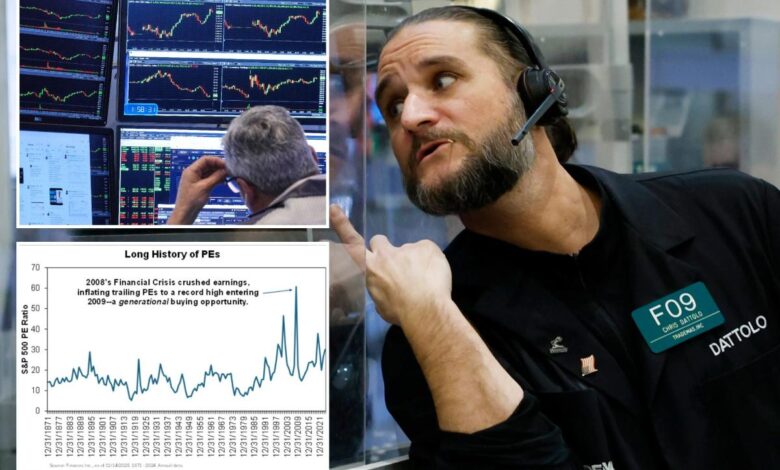
Valuation metrics have long been considered gospel by most investors when it comes to forecasting the stock market. However, with the current price-to-earnings ratio of US stocks at around 30, many are starting to believe that we are nearing the end of the bull market.
Despite popular belief, valuations do not actually predict the direction of stocks. History, spanning over a century, has shown that high PEs do not necessarily mean a market downturn is imminent.
Various valuation measures such as PE, dividend yield, price-to-book, and price-to-sales ratio are often touted as indicators for timing the market. However, their predictive power is limited.
Looking at the S&P 500 and R-squared, a statistical measure showing the relationship between two phenomena, we see that annual starting PE and forward 1-year returns have very low causality. This randomness indicates that PEs have little influence on future stock returns.
Valuation metrics are already factored into stock prices and do not always reflect future earnings accurately. This can lead to situations where high PEs actually present buying opportunities rather than signals to sell.
While high PEs have preceded periods of poor returns, they have also been followed by significant market gains. Therefore, putting too much faith in valuations for market timing can lead to missed opportunities.
Although valuation metrics can be useful for selecting individual stocks within specific categories, relying on them for broad market predictions is not recommended. It’s important to be cautious about blindly following valuation-based market forecasts.
Ken Fisher is the founder and executive chairman of Fisher Investments, a four-time New York Times bestselling author, and regular columnist in 21 countries globally.