‘Loud luxury’ is back as high-end brands look to rebound
A guest wears red knitted Gucci x Adidas sweater, outside Bluemarble, during the Menswear Spring/Summer 2026 show as part of Paris Fashion Week on June 26, 2025 in Paris, France.
Claudio Lavenia | Getty Images
“Loud luxury” is poised for a comeback as ailing fashion houses attempt to inject a sense of newness and novelty into their designs to win over weary shoppers.
A flurry of new creative directors at brands including Gucci, Chanel and Versace, and the arrival of new Kering CEO Luca de Meo, are seen phasing out “quiet luxury” subtlety in favor of statement styles, in what analysts say could be a turning point for the industry.
“We are seeing a shift to a bit more visible luxury at the moment,” Carole Madjo, head of European luxury goods research at Barclays, told CNBC’s “Squawk Box Europe” last month.
“Luxury fashion is a cycle. Now, with quiet luxury being a few years old, you want something else. Back to my novelty, newness thesis: I think this is now the focus.”
The sartorial shake-up comes as the luxury sector struggles to overcome a series of headwinds, from trade tariffs to soft consumer sentiment, following its Covid-era boom.
Ultra-luxe brands Brunello Cucinelli, Hermes and LVMH‘s Loro Piano have navigated that downturn largely unscathed, as their super-rich clientele continued to spend big on understated couture cashmere and high-end handbags.
But for many brands, quiet luxury’s discrete opulence, which glided to the fore in 2022 alongside the popularity of shows like HBO’s “Succession,” no longer cut it. That could herald a new era of large logos, bold branding and distinctive designs dominating catwalks to high streets.
“There is no longer the same level of desire for many products across the market, pushing all major brands to change creative direction in search of relevance,” Yanmei Tang, analyst at Third Bridge, said via email.
Gucci, Burberry, Moncler
One brand owning that shift is Burberry. Under the leadership of CEO Josh Schulman, the company is once again embracing its British heritage image after years of management changes, declining sales and knock-off dupes sullying associations with its eponymous check print and signature trench.
Chief Financial Officer Kate Ferry said during a second-quarter earnings call that the company’s statement heritage collection, which includes full checkered two-pieces, was “reigniting brand desire” and positioning Burberry among a wide consumer base as “a luxury brand with broad universal appeal.”
Modal at the Burberry Fall RTW 2025 fashion show as part of London Fashion Week on February 24, 2025 in London, United Kingdom.
Wwd | Getty Images
Gucci is seen targeting the same refit under its new artistic director Demna Gvasalia, whose boundary-pushing designs courted controversy at parent company Kering’s smaller Balenciaga label.
Kering‘s deputy CEO and brand development lead, Francesca Bellettini, said last week that a “first hint of [Demna’s] vision for Gucci” would come in September, with a full rollout of the collection due in early 2026.
Fashionistas and investors have long awaited a catalyst to turn around Gucci’s fortunes, as sales have suffered, particularly from weaker demand in China. The arrival next month of former Renault chief Luca de Meo as Kering CEO is also set to inject an outsider perspective and branding expertise.
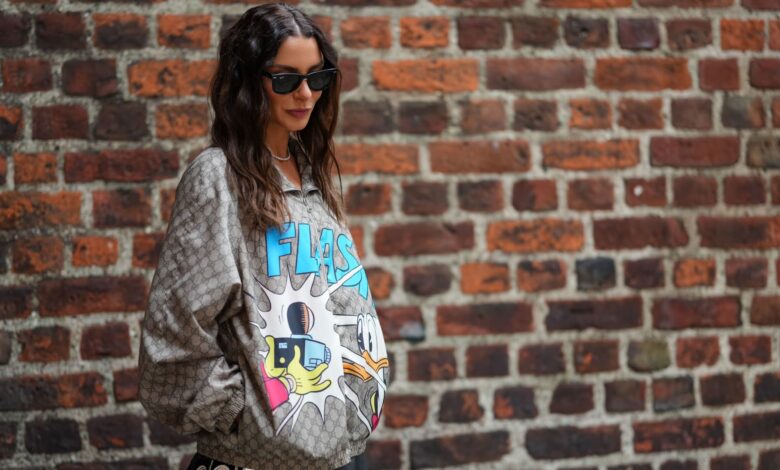
A model wears a loose-fitting jacket from the Gucci x Donald Duck collection on August 04, 2025 in Copenhagen, Denmark.
Edward Berthelot | Getty Images Entertainment | Getty Images
“The key thing is to bring back some brand desirability,” Madjo said. “Bringing newness — something fresh which has not been seen before — is, I think, what could make Gucci great again.”
New creative and artistic leads are also seen shaking things up at Chanel, Bottega Venetta and the famously out-there Versace. Moncler, meanwhile, has opted to experiment with rotating designers via its Genius collection, and Prada recently cited image adaptability among the brand’s virtues.
“What’s beautiful about Prada is that it can be sporty, it can be glamorous. This is one of the few brands that can allow us to play three or four games at the same time,” group CEO Andrea Guerra said on an earnings call last month.
The big divide
Fashion houses will be hoping that the image overhauls can help inspire waning interest from consumers who became disillusioned with brands after significant pandemic-era price hikes failed to reflect product innovation.
According to UBS’s Evidence Lab, the price of luxury goods rose by a record 8% on average in 2022, well above the pre-Covid rate of 1% and the 3% recorded this year to May.
Only top-end brands Hermes, Rolex and Richemont-owned Cartier have been able to sustain significant price rises in 2025 — though many more have warned that tariffs may force their hand.
Gucci, Burberry, and Prada have slightly increased their prices, while brands like Loro Piana have maintained a more affordable pricing strategy. This trend is expected to widen the gap between ultra-luxe brands and those that offer more accessible luxury options.
According to Marcus Morris, a portfolio manager at Alliance Bernstein, higher prices can only be justified by the right brand management and marketing. However, brands with a more moderate pricing approach may have an advantage in attracting a broader consumer base and regaining market share.
Luca Solca, a sector head for global luxury goods at Bernstein, noted that brands with a more affordable pricing strategy are likely to benefit from this middle ground in the market. In an era of loud luxury, these brands may find it easier to appeal to consumers who are looking for high-quality products at a more reasonable price point.
Overall, brands that strike a balance between luxury and affordability could stand out in a crowded market where showing off expensive products may not be as important as it once was.