Mark Zuckerberg questioned on Meta’s under-13 users and usage goals in landmark social media trial
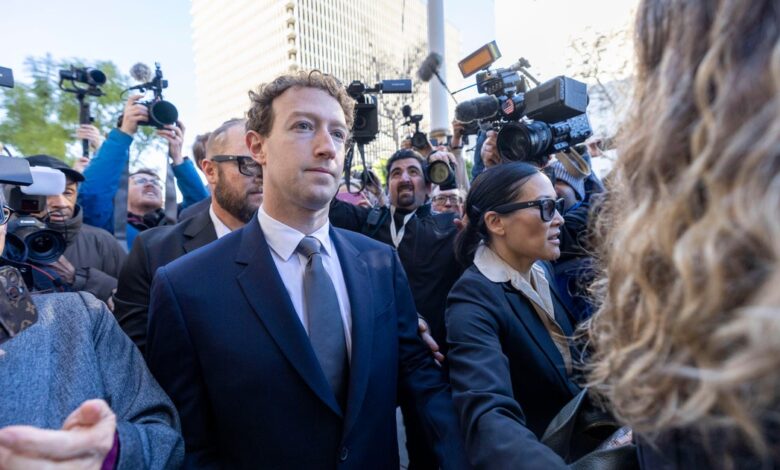
The trial against Meta CEO Mark Zuckerberg in a Los Angeles courtroom on Wednesday shed light on Instagram’s policies regarding under-13 users and Meta’s strategies to increase engagement. The trial, which began in late January, focuses on allegations that Meta knowingly provided an addictive and harmful product to children and teenagers.
One of the key plaintiffs in the case, identified as “KGM,” claimed that her early exposure to social media led to addiction and negatively impacted her mental health. Starting to use Instagram at the age of 9, KGM argued that platforms like Facebook, Instagram, and YouTube are designed to be addicting through recommendation algorithms and infinite scrolling features.
During the courtroom questioning, Zuckerberg was grilled by KGM’s lawyer Mark Lanier about Meta’s policy on allowing children under 13 to access Instagram. Zuckerberg acknowledged the difficulty in enforcing the rule due to users lying about their age to access the platform.
Lanier also probed Zuckerberg on Meta’s goal of increasing user engagement on Instagram. Zuckerberg clarified that the company uses time spent on the app as a metric to assess its performance against competitors like TikTok, rather than solely focusing on increasing user screen time.
Addressing concerns about Instagram’s beauty filters, Zuckerberg explained that Meta temporarily disabled the feature to prevent promoting unrealistic beauty standards. He emphasized that while the company allows beauty filters for free expression, it does not create or recommend them.
This trial marks Zuckerberg’s first appearance before a jury, following previous testimonies before Congress on youth safety issues within Meta’s platforms.
Implications of the Trial
The outcome of this lawsuit could set a precedent for similar cases against social media companies. While TikTok and Snapchat settled before the trial, experts draw parallels between this trial and the tobacco industry lawsuits of the 1990s, which aimed to hold companies accountable for their products and marketing practices.
UCLA law professor Melodi Dinçer highlighted the importance of such trials in uncovering the disparity between companies’ public statements and their actual practices.

Prior to Zuckerberg’s testimony, Meta refuted the allegations, emphasizing its commitment to supporting young users and suggesting that KGM had pre-existing mental health challenges. Google, the parent company of YouTube, also denied the accusations.
Zuckerberg’s courtroom appearance followed Instagram CEO Adam Mosseri’s testimony, where he rejected the idea of clinical addiction to social media and instead referred to “problematic use.” Mosseri defended Instagram’s practices, stating that the platform generates less revenue from teens compared to other demographics.