Measles Outbreak In Texas Officially Has Ended, But The Threat Remains
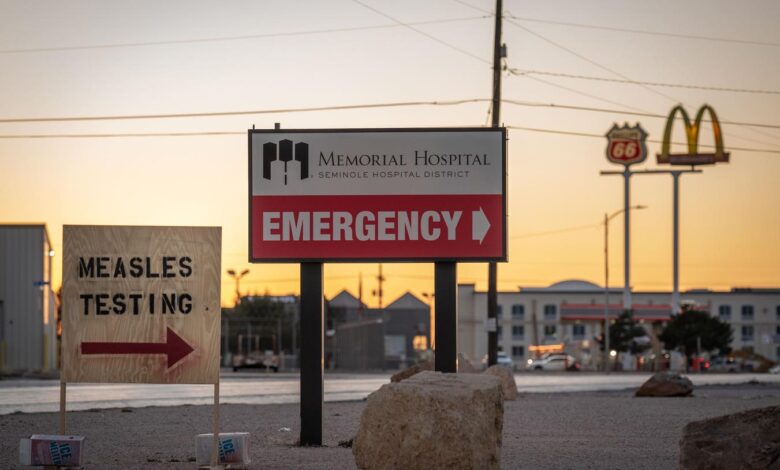
The recent announcement from the Texas Department of State Health Services brought both relief and caution as they declared an end to the measles outbreak in West Texas. While this is certainly good news, officials are quick to remind the public that the threat of new cases still looms large. The importance of vaccination as a preventive measure cannot be stressed enough, as it not only prevents infections but also reduces the severity of the disease and limits its spread.
The outbreak, which began in January, saw a total of 762 confirmed cases over the course of seven months, resulting in 99 hospitalizations and tragically, two deaths. Alarmingly, about 30% of these cases were in children under 5 years of age, with over two-thirds occurring in individuals under 18 years old. Shockingly, only 21 out of the 762 infected individuals had received the recommended two-dose measles vaccine.
While the majority of cases were concentrated in the western part of the state, particularly in Gaines County where 414 cases were reported, the virus managed to spread beyond these borders. Linked cases were reported in multiple Texas counties, as well as in New Mexico, Oklahoma, Kansas, Mexico, and Canada. Unsurprisingly, the common denominator among most cases was the lack of vaccination or under-vaccination.
Measles, being a highly contagious airborne disease, presents with symptoms like high fever, respiratory issues, conjunctivitis, and the characteristic rash. The appearance of the rash typically occurs around 14 days after exposure to the virus, although in some cases, the incubation period may be longer. It is crucial to note that measles is not a benign illness as some may believe. According to the CDC, about 20% of unvaccinated individuals who contract measles in the U.S. require hospitalization, with a fatality rate of approximately one to three in every 1,000 unvaccinated children. The risks are even higher for pregnant women, as measles infection during pregnancy can lead to complications like preterm delivery, low birth weight, and miscarriage.
Thankfully, measles can be prevented through vaccination. The MMR vaccine, which combines protection against measles, mumps, and rubella, has proven to be both safe and effective. Prior to the introduction of the first measles vaccine in 1963, half a million cases were reported annually in the U.S. In 2023, only 47 cases were reported, with the vast majority occurring in unvaccinated individuals. It is worth noting that no link has been found between the MMR vaccine and autism, and the vaccine has never contained mercury or thimerosal.
While the current measles outbreak in West Texas has officially ended, the threat of new cases remains real. In 2025 alone, measles cases have been reported in 40 U.S. states and multiple countries worldwide. The importance of vaccination cannot be overstated, as it not only protects individuals but also helps prevent the spread of the virus to vulnerable populations. As the CDC aptly puts it, “Measles anywhere is a threat everywhere.”