Military vet claims NY cannabis regulators are threatening his pot store
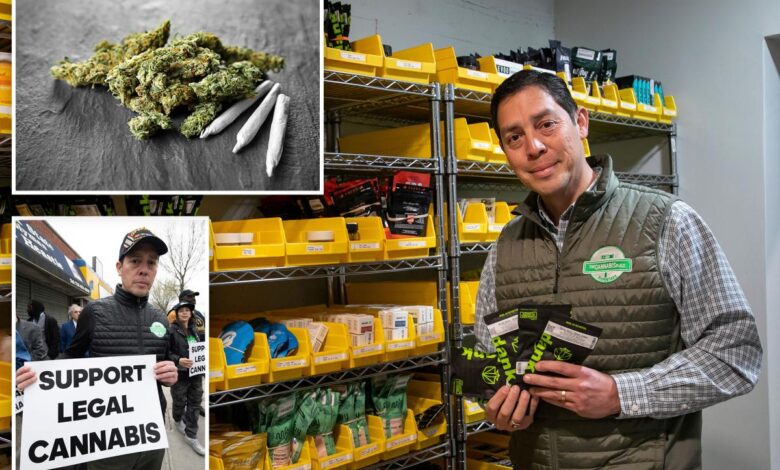
Disabled military veteran Osbert Orduna, one of the first to run a legal pot shop, is facing the threat of losing his business as his license renewal hangs in the balance. The license for his shop, The Cannabis Place in Middle Village, is set to expire on February 12, and Orduna is accusing state cannabis regulators of not renewing it due to his recent labor agreement with a new union.
During a Cannabis Control Board meeting, Orduna expressed concern for the 30 employees at his shop whose jobs are at risk if his license is pulled. He emphasized that the only change in his license renewal application was the labor agreement with a different union, Local 420 of the International Union of Journeymen and Allied Trades, instead of the previous union, Local 338 of RWDSU/UFCW.
Local 420 UJAT secretary-treasurer Guy James hinted that the regulators may have put a hold on Orduna’s application because of his switch in union affiliation, stating, “if it smells, it smells.” Despite being an advocate for New York’s cannabis industry and appearing at press conferences with Governor Kathy Hochul, Orduna has been critical of the Office of Cannabis Management. He even joined a lawsuit against state regulators over buffer zone rules separating dispensaries from schools.
In a letter to Orduna, OCM mentioned that if the review of his license renewal is not completed by February 12, he can continue operating under his expired license until a determination is made by the Cannabis Control Board. The agency assured that they will contact the licensee if any issues need to be addressed during the review process.
Although OCM stated that licensees with timely and complete renewal applications can continue operating under their existing or lapsed license, Orduna expressed concerns about his bank freezing assets or landlords padlocking the premises if his license lapses. OCM reassured that they would send an email to prevent such actions from taking place.
With 582 licensed cannabis dispensaries in New York, the industry has seen significant growth despite challenges such as bureaucratic bungling and management shake-ups. Orduna’s case sheds light on the complexities and uncertainties faced by business owners in the evolving cannabis landscape, especially for disabled veterans seeking opportunities in the industry.