Minneapolis Fed’s Kashkari indicates interest rates don’t need to be cut much more
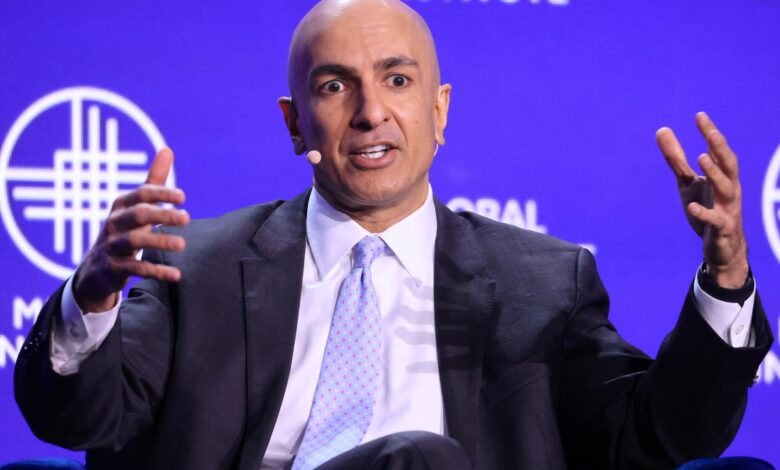
Minneapolis Federal Reserve President Neel Kashkari recently stated in a CNBC interview that he believes the central bank is nearing the point where it should halt its interest rate cuts. Kashkari emphasized that the crucial factor now is whether the Fed should prioritize addressing a slowing labor market or persistent inflation.
“I think we’re pretty close to neutral right now,” Kashkari stated during the live CNBC “Squawk Box” interview. “We just need more data to determine whether inflation or the labor market is exerting a greater influence, and then we can adjust our stance accordingly.”
Determining a neutral position is critical for Fed policymakers as they deliberate whether to continue the series of three consecutive rate cuts that were implemented in the latter part of 2025 or maintain the current rate while monitoring economic conditions. The federal funds rate is presently targeted within a range of 3.5%-3.75%, which is only about half a percentage point away from the committee’s consensus on the neutral rate – one that neither stimulates nor hampers economic growth.
Kashkari expressed concerns about inflation, stating, “I think inflation is still too high. And the big question in my mind is, how tight is monetary policy?” He acknowledged that despite expectations of an economic slowdown in recent years, the economy has proven to be more resilient than anticipated, indicating that monetary policy may not be exerting significant downward pressure on the economy.
As a voting member of the Federal Open Market Committee, Kashkari’s perspective holds weight in the decision-making process regarding benchmark interest rates. While he has voiced worries about inflation, particularly in light of President Trump’s tariffs, he also acknowledged the committee’s potential conclusion on interest rate cuts.
Regarding the labor market, Kashkari noted that the unemployment rate has risen to 4.6% and highlighted the risk of inflation persistence due to tariff effects. Despite concerns, he expressed confidence in Fed Chair Jerome Powell, stating that he would be pleased if Powell remained on the board after his term as chair concludes in May.
In a separate development, President Trump indicated plans to appoint a successor to Powell in January. However, Kashkari praised Powell’s performance as chair, stating, “I think he’s done a wonderful job as chair. Overall, I think he’s done an excellent job, and I would love to see him remain as a colleague for as long as he likes.”
In conclusion, Kashkari’s insights shed light on the Federal Reserve’s deliberations and the complex factors influencing monetary policy decisions. As economic conditions evolve, the Fed faces the ongoing challenge of balancing inflation, labor market trends, and the broader economic landscape.