Modi gives tax boon to India’s economy amid Trump tariff tensions
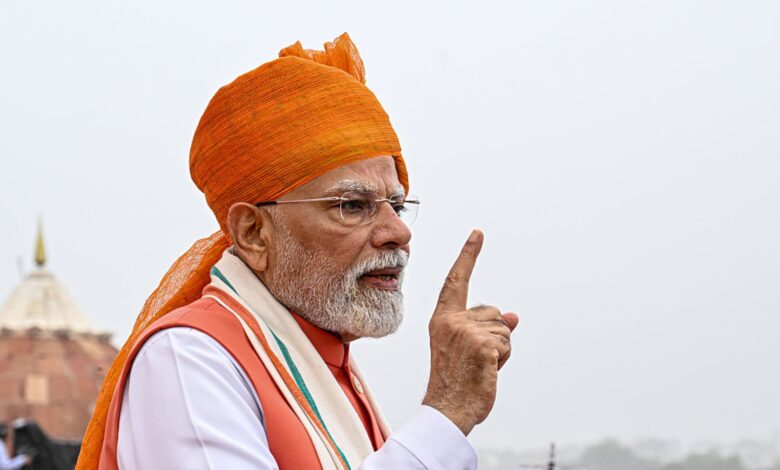
Indian markets experienced a significant rally on Monday following Prime Minister Narendra Modi’s announcement of tax cuts that are aimed at boosting the domestic economy amidst challenges posed by U.S. tariffs. The Nifty 50 index surged by 1%, while the BSE Sensex also saw an increase of 0.84%. Additionally, the U.S. dollar depreciated by 0.18% against the Indian rupee.
During his Independence Day speech on Friday, Prime Minister Narendra Modi emphasized the importance of self-reliance and proposed a series of financial reforms. One of the key changes includes the implementation of a two-rate structure of 5% and 18% under the goods and services tax (GST) regime, with plans to eliminate the previous 12% and 28% levies on certain items. Industry experts believe that these reforms will simplify compliance, lower tax rates, and modernize the GST framework to promote growth.
The automotive industry in India is expected to benefit from these new tax policies, especially after a period of sluggish growth. Sales of passenger vehicles in India increased by 4.2% in the 2024 calendar year, marking the slowest growth rate in four years. Auto sector stocks experienced a boost on Monday, with companies like Maruti Suzuki India and Hyundai Motor India witnessing significant gains.
The tax overhaul introduced by Modi is projected to strengthen India’s economy, which the Reserve Bank of India predicts will grow by 6.5% in the 2025-2026 fiscal year. This comes at a time of geopolitical uncertainty fueled by U.S. tariffs, particularly targeting India’s imports of Russian crude oil. Despite these challenges, the tax reforms are expected to offset the impact of tariffs and stimulate domestic consumption, which is a key driver of economic growth in India.
According to Deloitte, domestic consumption accounted for 61.4% of India’s GDP in the 2024-25 fiscal year, with urban consumption and a shift towards luxury goods playing a significant role in driving economic momentum. India Ratings & Research forecasts a 6.9% annual growth in private final consumption for the fiscal year ending in March 2026, outpacing the overall GDP growth rate of 6.3%. This growth is attributed to factors such as low real wage increases, reduced household savings, and an increase in personal loans.
Overall, the tax reforms announced by Prime Minister Modi are expected to have a positive impact on India’s economy by stimulating consumption, boosting investment, and supporting growth across various sectors. The implementation of these measures is anticipated to enhance India’s economic resilience in the face of global economic challenges.