More Venezuelan oil is coming to the U.S. Here’s what that means for gas prices.
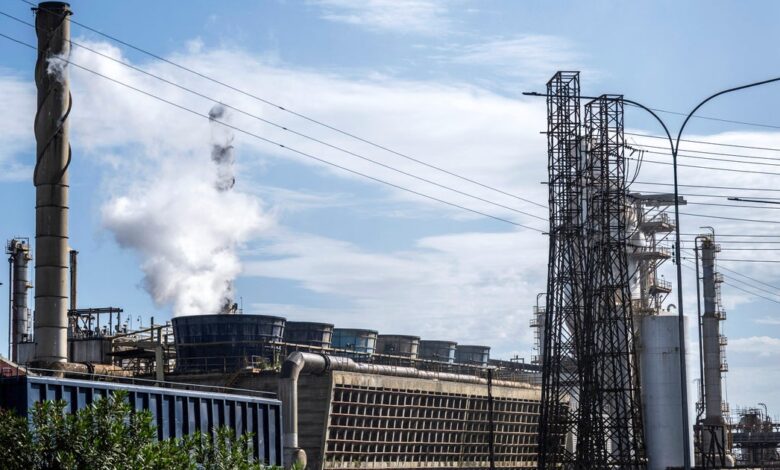
The recent sale of Venezuelan oil to the U.S. by the Trump administration marks a significant development in the push to access Venezuela’s vast oil reserves. With President Trump valuing the shipment at $500 million, there are questions about how this will impact U.S. drivers and gas prices.
Currently, gas prices are at $2.67 a gallon nationally, the lowest since May 2021. However, prices have been steadily declining since last November, preceding the U.S. military operation that captured Venezuela’s autocratic leader, Nicolás Maduro. The big question now is whether Venezuelan oil will push prices even lower.
Economists have differing opinions on the immediate impact of Venezuelan oil on consumer prices. Dr. Ian Lange, a professor of economics and business, believes that the expectation of lower prices in the future due to Venezuelan crude could impact prices now. On the other hand, Patrick De Haan, head of petroleum analysis at GasBuddy, thinks it’s too early for a measurable impact on pump prices as it may take years to see a significant increase in oil output from Venezuela.
Before the 2019 sanctions, Venezuela supplied a significant percentage of crude oil to the U.S. market. However, the country’s current production levels are much lower than in the past, and a substantial ramp-up would not necessarily benefit the global oil supply chain.
Venezuela’s oil infrastructure has suffered from years of underinvestment and corruption, making it challenging for U.S. companies to invest in rebuilding it. As a result, the impact of Venezuelan oil on U.S. gasoline prices may be limited in the near term.
Despite the potential for increased competition between Venezuelan and Canadian oil, Venezuela is not currently ready to compete at that level. U.S. refineries, especially those along the Gulf Coast, rely on a mix of light and heavy crude, with Canada being the primary supplier of heavy crude.
The U.S. produces mostly light crude, which is cheaper to refine, but a mix of light and heavy crude is needed for optimal refinery operations. If Venezuela can increase production, it could lead to competition with Canada, ultimately benefiting consumers by lowering the price of refined products.
However, flooding the market with more oil carries risks, including the possibility of prices falling too low. If crude prices drop significantly, American producers may cut back on production, leading to job losses and economic challenges in oil-producing regions. The cycle of supply and demand continues, with fluctuations in domestic production impacting prices in the long run.
In conclusion, the sale of Venezuelan oil to the U.S. has the potential to impact gas prices and the oil market in the future. However, the immediate effects may be limited, and it will take time to see how this development plays out. The balance between supply and demand will ultimately determine the trajectory of gas prices in the coming years.