Most Fed officials see rate cuts coming, but opinions vary widely on how many, minutes show
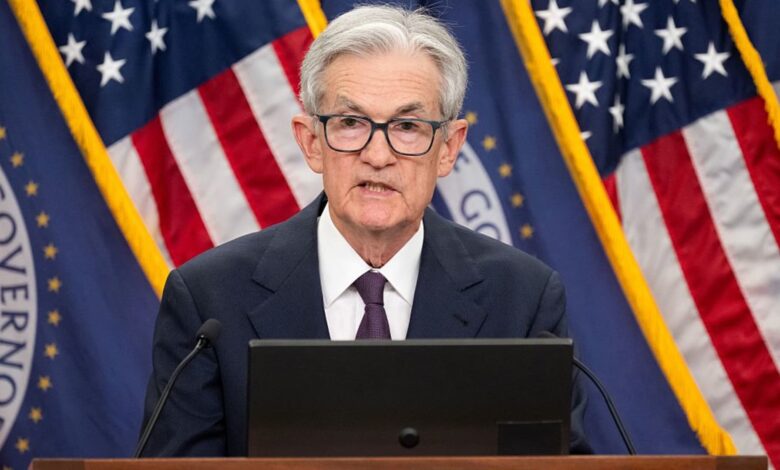
Federal Reserve officials were at odds during their June meeting regarding the approach to cutting interest rates, with concerns over tariff-induced inflation and mixed signals from the labor market and economy. The minutes from the June 17-18 meeting, released on Wednesday, revealed that policymakers maintained a cautious stance on future rate adjustments, deciding unanimously to keep the key borrowing rate between 4.25% and 4.5%, where it has stood since December 2024.
Despite the decision to hold rates steady, there was a notable division among officials on the path forward. While most participants agreed that a reduction in the federal funds rate range would be appropriate this year, the extent of the cuts was a subject of debate. Some officials believed that the next rate cut could happen as early as this month, while others felt that no cuts were necessary in 2024. Fed Governors Michelle Bowman and Christopher Waller expressed openness to cutting rates in July if inflation remains subdued.
Several participants suggested that the current overnight funds rate may be close to a neutral level, indicating that only a few rate cuts may be warranted. These officials pointed to inflation levels above the 2% target and a resilient economy as reasons for a more cautious approach.
The Fed’s projections for rate cuts were revised at the meeting, with expectations of two cuts this year followed by three more in the next couple of years. However, individual members’ outlooks varied, reflecting differing opinions on the extent of rate adjustments.
The release of the meeting minutes coincided with President Donald Trump’s continued pressure on Fed Chair Jerome Powell and the committee to implement aggressive rate cuts. Despite Trump’s calls for aggressive easing, Powell has emphasized the importance of data-driven decision-making and staying vigilant in the face of uncertainty.
The minutes highlighted the Fed’s commitment to a cautious approach in adjusting monetary policy, taking into consideration both inflation and employment outlooks. Officials acknowledged the potential challenges of balancing elevated inflation with weakening employment conditions, emphasizing the importance of aligning policy with the overarching goals of price stability and full employment.
Recent data suggest that Trump’s tariffs have not yet significantly impacted prices, with the consumer price index showing only a modest increase in May. While inflation remains above the Fed’s target, public sentiment towards future inflation has improved, with many participants noting that the effects of tariffs on prices could be limited if trade agreements are reached promptly.
On the labor market front, job gains have slowed, but the rate of nonfarm payrolls growth has been stronger than expected. Despite the positive labor market indicators, consumer spending has slowed, with declines in personal expenditures and retail sales in May.
Overall, the Fed’s cautious approach to monetary policy reflects a balanced consideration of inflation, economic growth, and employment dynamics. The minutes underscore the importance of data-driven decision-making and a measured response to evolving economic conditions.