Musk Calls Bitcoin A ‘Fundamental, Physics-Based Currency’
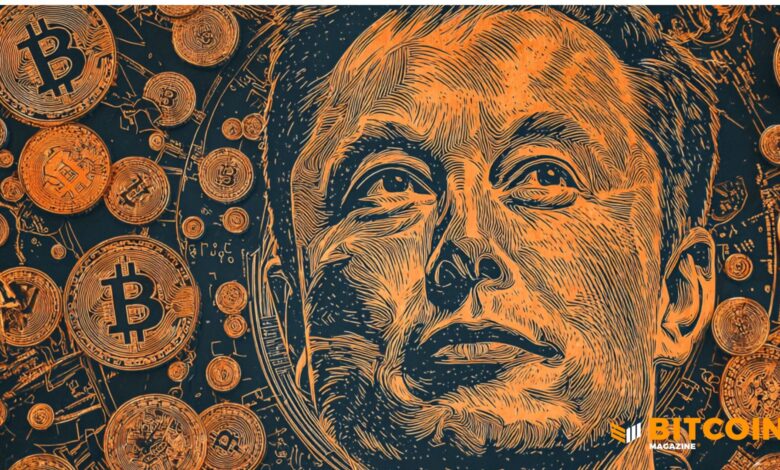
Elon Musk Explores the Physics of Bitcoin and Energy
Renowned entrepreneur Elon Musk recently sparked a conversation about Bitcoin, describing it as a “fundamental physics-based currency” rooted in energy. In a podcast with Nikhil Kamath, Musk emphasized that the value of Bitcoin is intricately linked to real-world energy consumption, setting it apart from traditional fiat currencies.
“Energy is the true currency,” Musk stated. “This is why I believe Bitcoin is based on energy. You can’t legislate energy. You can’t simply pass a law and magically generate energy.”
Musk highlighted the rigorous process of producing and utilizing energy, drawing parallels to Bitcoin’s proof-of-work system. This system demands significant computational power and electricity to secure the network, establishing a connection between energy expenditure and the cryptocurrency’s value.
Referencing the Kardashev scale, a measure of a civilization’s energy consumption, Musk suggested that assessing a society based on its ability to generate and manage energy aligns with the principles governing Bitcoin. The scarcity and computational effort required by the cryptocurrency mirror the advancement of civilizations in harnessing energy.
Looking ahead, Musk proposed a future where advancements in artificial intelligence and robotics could render traditional currency obsolete.
“In a world where resources are abundant, money may no longer be necessary as a tool for allocating labor,” Musk explained, drawing inspiration from Iain M. Banks’ post-scarcity Culture series, where super-intelligent machines oversee resource management without the need for monetary systems.
Musk: Energy Cannot Be Printed
Musk emphasized the distinct characteristics of Bitcoin compared to fiat currencies. While governments have the authority to print money at will, Bitcoin’s proof-of-work system ties its creation to energy and computational power, establishing inherent scarcity and reducing susceptibility to political influence.
“Governments have the power to print money, but they cannot replicate energy,” Musk pointed out.
While Musk envisions a future where energy serves as a fundamental measure of value, he acknowledged that traditional currency remains predominant in current society. National currencies continue to dictate economic transactions, salaries, and savings, with cryptocurrencies like Bitcoin existing as supplementary assets rather than replacements for everyday financial exchanges.
Musk’s insights shed light on the philosophical foundation of Bitcoin, linking it to the realms of physics and energy rather than conventional monetary policies and governmental control.
Today, the price of Bitcoin experienced an 8% decline to the mid-$84,000 range early Monday, extending a downward trend that has seen a decrease of over 30% since reaching record highs in October. The recent drop follows a brief recovery last week, where Bitcoin briefly surpassed $92,500 after hitting lows near $81,000 in November.