Musk suggests he might support primary challenges against Republicans who support Trump’s “big, beautiful bill”
Elon Musk’s Criticism of Massive Tax and Domestic Policy Package Grows Stronger
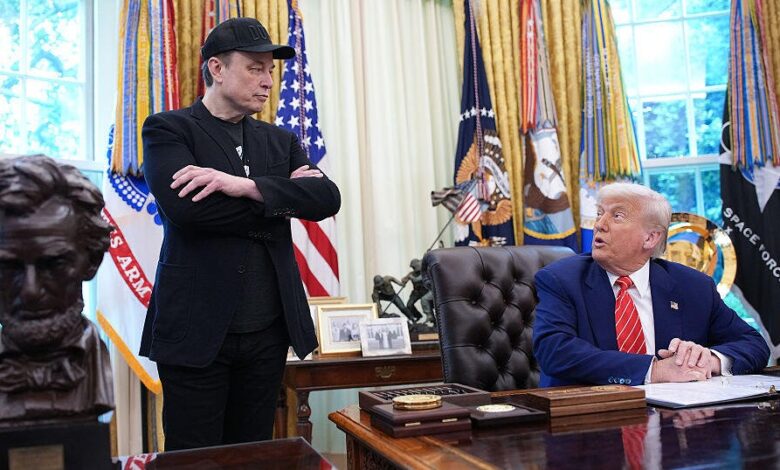
Elon Musk did not hold back on his criticism of the massive tax and domestic policy package making its way through the Senate. In a series of posts on X, the billionaire and former Trump ally expressed his disdain for the bill, suggesting that he could support primary challenges against Republicans who vote for it.
Musk called out members of Congress who campaigned on reducing government spending but then voted for what he referred to as “the biggest debt increase in history.” He warned that those who support the bill will “lose their primary next year if it is the last thing I do on this Earth.”
In a show of support for Rep. Thomas Massie, who voted against the bill in the House, Musk indicated that he would back a primary challenge against other Republicans who support the legislation. Additionally, Musk floated the idea of starting a new political party called the “America Party” if the bill passes, emphasizing the need for a party that truly cares about the people.
As the Senate worked to advance the bill, Musk’s criticism intensified. He has been vocal about his opposition to the bill, calling it a “disgusting abomination” in early June. While Musk had initially supported Mr. Trump and other Republicans, he has since distanced himself from the former president and has indicated a shift in his political spending.
President Trump, in response to Musk’s criticism, took to Truth Social to highlight the federal electric vehicle tax credits that Tesla has benefited from. Trump suggested that Musk has received more subsidies than any other individual in history and implied that without these subsidies, Tesla’s operations would suffer.
Musk fired back at Trump, stating that all subsidies should be cut. His criticisms of the bill primarily focus on its high spending levels, the increase in the debt ceiling, and the cuts to green energy tax credits. He believes that these provisions could harm American jobs and strategic interests.
The bill’s impact on Musk’s businesses, particularly Tesla, is a cause for concern. The phaseout of electric vehicle tax credits and cuts to renewable energy projects could cost Tesla billions of dollars and make its products less competitive in the market.
Overall, Musk’s opposition to the bill stems from his belief that it does not serve the best interests of the American people. As the debate over the legislation continues, Musk’s involvement in politics and advocacy for a new political party signal a potential shift in his approach to governance and policy-making.