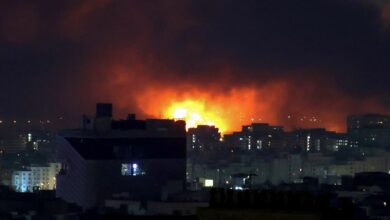
New Delhi air quality at hazardous levels after Diwali fireworks
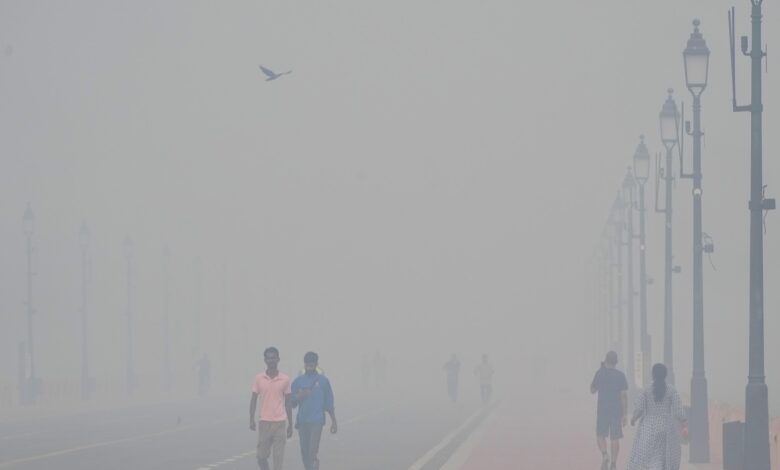
NEW DELHI — New Delhi (AP) — A thick blanket of smog engulfed India’s capital on Tuesday, following the celebration of the Hindu festival of Diwali with fireworks that escalated air pollution levels to hazardous levels throughout the city.
Late into Monday night, revelers in New Delhi set off firecrackers, filling the air with smoke and fine particles that combined with seasonal pollution and stagnant weather conditions. By Tuesday morning, the Air Quality Index in several neighborhoods had exceeded 350, reaching a “severe” level deemed unsafe to breathe by the World Health Organization.
Visibility in some parts of the city also decreased as a gray haze enveloped streets, tall buildings, and historical landmarks.
Tourist Vedant Pachkande expressed, “I have never seen anything like this before. We can’t see anything here because of pollution.”
Despite a partial ban on firecrackers during Diwali, the use of “green firecrackers” that emit fewer pollutants was allowed but not strictly adhered to, contributing to the worsening air quality in New Delhi and its metropolitan area.
To combat pollution levels, authorities have implemented various measures, including restrictions on construction activities and diesel generators. However, environmentalists emphasize the need for long-term solutions like cleaner energy sources and stricter vehicle emission controls to address the annual pollution crisis.
A recent study highlighted that rising pollution levels in India have led to a decrease in sunshine hours, impacting solar power generation, agricultural productivity, and overall environmental and public health.
Indian scientists have observed a steady decline in sunshine hours across the country, particularly in heavily polluted regions like northern India, attributing it to increasing aerosols from industrial emissions, biomass burning, and vehicle pollution.
Manoj K. Srivastava, a scientist involved in the study, noted that the reduction in sunshine can have far-reaching consequences on various aspects of Indian life, including energy generation, agriculture, and public health.
___
AP climate reporter Sibi Arasu contributed to this report.