New Medicaid work rules likely to hit middle-aged adults hard
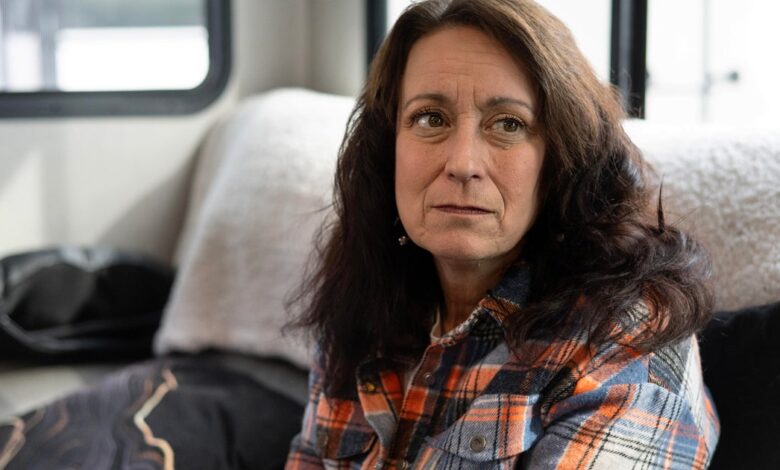
Lori Kelley, a 59-year-old resident of Harrisburg, North Carolina, has been facing challenges due to her deteriorating vision. Her vision impairment has made it difficult for her to find steady work, leading her to close her nonprofit circus arts school last year as she could no longer complete paperwork. She then worked briefly at a pizza shop making dough before settling into a job sorting recyclable materials at a local concert venue, which serves as her main source of income. Despite the temporary nature of her work, Kelley appreciates the understanding and support she receives from her employer.
Living in a camper, Kelley survives on less than $10,000 a year, with Medicaid health coverage playing a crucial role in her ability to access necessary medications for arthritis and anxiety, as well as manage her high blood pressure. However, with new rules set to take effect requiring individuals like Kelley to work, volunteer, attend school, or engage in other qualifying activities for at least 80 hours a month, she is filled with uncertainty and fear about potentially losing her healthcare coverage next year.
The new rules have been touted by Republican lawmakers as a means to prevent young, unemployed individuals from taking advantage of the Medicaid program. In reality, however, it’s adults aged 50 to 64, particularly women, who are likely to be most affected by these regulations. Jennifer Tolbert, deputy director of the Program on Medicaid and the Uninsured at KFF, highlights that the work requirements will create significant barriers for individuals like Kelley in maintaining their coverage, potentially resulting in many losing access to essential healthcare services.
Starting in January 2027, approximately 20 million low-income Americans in 42 states and Washington, D.C. will need to meet the activity requirements to gain or retain Medicaid health coverage. While some states, such as Alabama and Texas, did not expand their Medicaid programs under the Affordable Care Act and are exempt from implementing the work rules, the Congressional Budget Office predicts that at least 5 million fewer people will have Medicaid coverage over the next decade due to these regulations.
Critics argue that the work rules are a cost-saving measure that could ultimately jeopardize the health and financial well-being of vulnerable individuals like Kelley. The Department of Health and Human Services, however, maintains that the requirements are necessary to ensure Medicaid’s long-term sustainability while protecting it for those who are truly in need.
Middle-aged women on Medicaid, particularly those between the ages of 50 and 64, face unique challenges in meeting the work requirements due to caregiving responsibilities and health limitations. Research shows that a small percentage of the Medicaid population classified as “able-bodied” and not working consists mostly of women in their 50s and older who have left the workforce to become caregivers.
Despite the intentions behind the work requirements, experts like Jane Tavares warn that making it harder for individuals to maintain Medicaid coverage may actually undermine their ability to work by leaving their health issues untreated. This could lead to exacerbated health problems later on, ultimately costing more in healthcare expenses.
Individuals like Paula Wallace from Chidester, Arkansas, who serves as the primary caregiver for her husband with advanced cirrhosis, are already struggling to envision how they can comply with the new work rules while meeting their caregiving responsibilities. The lack of clear guidance on exemptions for caregivers adds to the uncertainty and anxiety surrounding the implementation of these regulations.
As the deadline for complying with the work requirements approaches, many low-income Americans, particularly middle-aged women like Lori Kelley and Paula Wallace, are left in a state of limbo, unsure of how they will navigate the complex system to maintain their Medicaid coverage. The potential consequences of losing access to essential healthcare services weigh heavily on their minds, underscoring the need for a more nuanced approach to addressing the healthcare needs of vulnerable populations.