Nvidia says it has Trump administration green light to sell China its advanced H20 computer chips used for AI
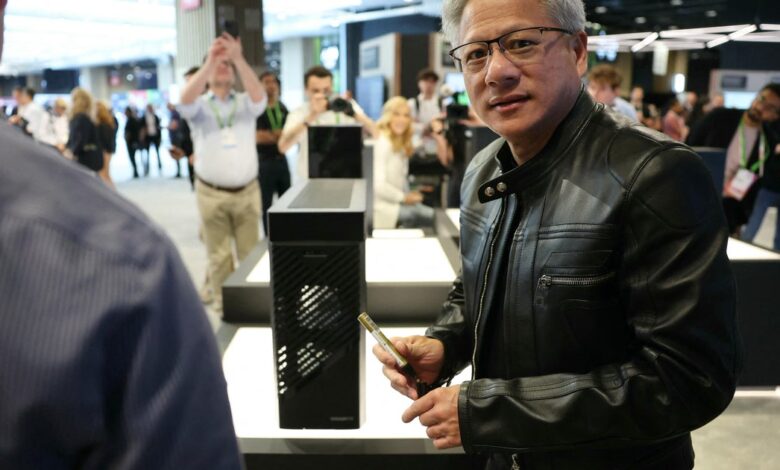
Nvidia CEO Jensen Huang Announces Approval to Sell Advanced AI Chips to China
Bangkok— In a surprising turn of events, Nvidia CEO Jensen Huang revealed that the Trump administration has given approval for the technology giant to sell its advanced H20 computer chips, used for developing artificial intelligence, to China. This decision marks a significant reversal of the administration’s previous policy.
The announcement was made in a company blog post late Monday, where Huang also discussed the approval during an interview with China’s state-run CGTN television network. “The U.S. government has assured Nvidia that licenses will be granted, and Nvidia hopes to start deliveries soon,” the post stated.
During a press conference in Beijing, Huang stated, “Today, I’m announcing that the U.S. government has approved for us filing licenses to start shipping H20s.” He emphasized the importance of the Chinese market, noting that half of the world’s AI researchers are based in China.
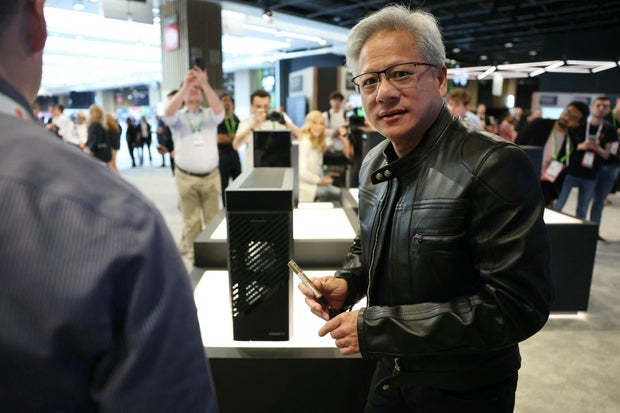
Huang, who recently met with President Trump and other U.S. policymakers, is currently in Beijing to attend a supply chain conference and engage in discussions with Chinese officials. The broadcast showed Huang meeting with Ren Hongbin, the head of the China Council for Promotion of International Trade, host of the China International Supply Chain Expo.
Industry experts believe that this new policy will lead to substantial revenue growth for Nvidia, compensating for previous losses due to export restrictions. However, there are concerns about the longevity of this decision given the unpredictable nature of U.S. policy shifts in recent years.
Nvidia, a pioneer in AI technology, has seen significant success in the industry, becoming the first company to achieve a market value exceeding $4 trillion. Despite this, trade tensions between the U.S. and China have posed challenges for the sector.
The U.S. has been tightening controls on the export of advanced technology to China, citing national security risks. The emergence of China’s DeepSeek AI chatbot earlier this year raised concerns about the potential military applications of advanced chips in AI development.
In response, the Biden administration introduced a new framework for exporting advanced computer chips for AI development, aiming to balance security concerns with economic interests. However, in April, restrictions were placed on the sale of Nvidia’s H20 chips and AMD’s MI308 chips to China.
Nvidia estimated that these export controls would cost the company an additional $5.5 billion. Huang and other tech leaders have been advocating for the reversal of these restrictions, highlighting the importance of competition in the global AI market and the risk of pushing other countries towards China’s AI technology.