NYC shop owners claim junkies shoplifting, selling goods for drugs: ‘It’s like a parade’
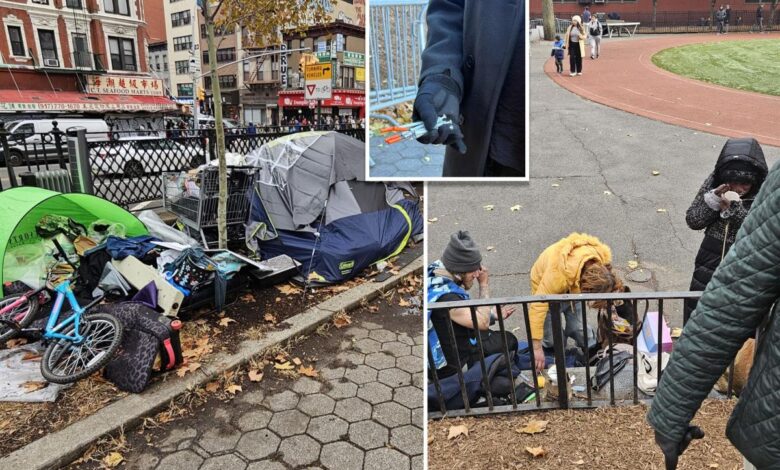
Lower East Side residents and local storeowners are fed up with the influx of junkies and vagrants at Sara D. Roosevelt Park. The park has become a hotspot for addicts who were previously kicked out of Washington Square Park, causing chaos in a neighborhood filled with young families and hardworking merchants.
Storeowners in the area have reported that the addicts come into their shops, grab merchandise, and then head to the park to sell it. This constant stream of vagrants not only hurts their businesses but also poses a safety risk for the community.
The situation has drawn criticism from local community leaders who feel that City Hall has neglected the neighborhood. The concentration of homeless shelters, including one for parolees, surrounding the park has created a breeding ground for drug dealers and addicts to thrive.
Last year, the NYPD cracked down on the drug problem at Washington Square Park, prompting the addicts to migrate to Sara D. Roosevelt Park. Now, the park is littered with used needles, and addicts openly shoot up in broad daylight, putting children and families at risk.
Community Board member Marlin Chan noted that drug and alcohol issues have plagued Sara D. Roosevelt Park for years, but the problem has escalated since the influx of addicts from Washington Square Park. Despite occasional enforcement efforts by the NYPD, the lack of follow-through in the court system perpetuates a vicious cycle of drug-related crimes.
Retired state Supreme Court justice Kathryn Freed, a longtime resident of the neighborhood, has also witnessed the deteriorating conditions in the park. She emphasized the urgent need for improvement efforts similar to those undertaken in Washington Square Park to address the ongoing safety concerns in Sara D. Roosevelt Park.
The community and local leaders have been vocal about the deteriorating conditions in the park, citing incidents of violence and harassment that have plagued the area for years. Without significant intervention and a collaborative effort between city agencies and the community, the situation is unlikely to improve.