NYT and WaPo held reporting about Maduro raid, drawing rare praise from Secretary of State Marco Rubio
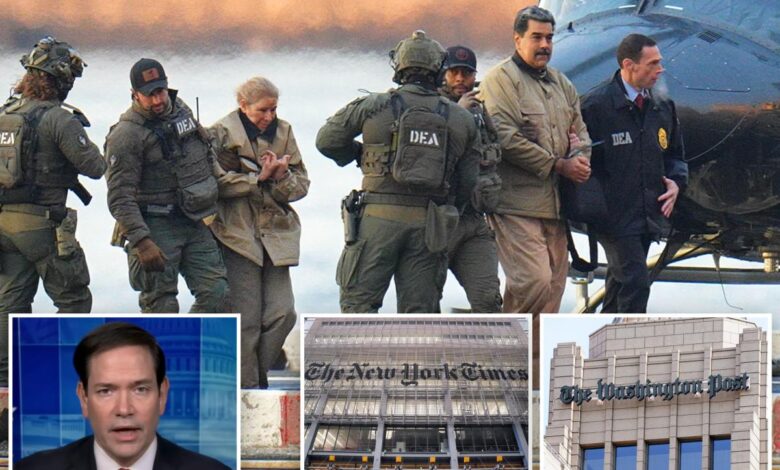
A secret US raid that captured Venezuelan leader Nicolás Maduro was deliberately kept under wraps by major news organizations such as the New York Times and the Washington Post, a decision that Secretary of State Marco Rubio said potentially saved American lives.
Rubio publicly expressed his gratitude to the press for exercising restraint and not reporting on the military operation until US forces had safely exited Venezuela. He commended news outlets for prioritizing operational security over breaking news during a high-risk mission.
According to reports from the news site Semafor, both the New York Times and the Washington Post were informed about the raid before it commenced on a late Friday but chose to withhold publishing to avoid endangering US troops.
Secretary of State Marco Rubio explained on ABC’s “This Week” that the primary reason for the secrecy was operational security to protect the individuals involved in the mission. He specifically thanked several media outlets for refraining from reporting on the raid, stating that American lives could have been at risk otherwise.
This rare instance of praise from a top White House official towards legacy media outlets contrasts with President Trump’s past criticism of the press as hostile and untrustworthy.
In previous instances, the US press has postponed or refrained from publishing sensitive information at the government’s request when it posed immediate risks to lives or national security.
One of the most notable precedents dates back to 1961 when the New York Times delayed reporting on the CIA-backed Bay of Pigs invasion of Cuba to avoid jeopardizing the operation following warnings from the Kennedy administration.
In a similar vein, the New York Times refrained from publishing details about warrantless surveillance by the NSA in 2004 after appeals from the George W. Bush administration citing national security concerns.
The Washington Post also chose to delay reporting on the impending strike, a decision lauded by Marco Rubio for its potential to safeguard lives. Christopher Sadowski
Collaboration between news organizations and the government has historically been observed during sensitive military operations to prevent compromising national security or endangering lives.
The New York Post has reached out to the White House, the New York Times, and the Washington Post for comments on this matter.