Offshoring vs. Outsourcing: Differences, Advantages and Examples
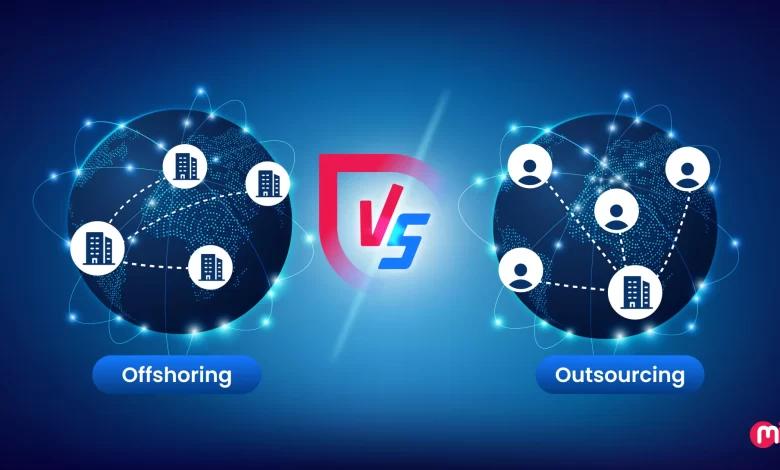
Offshoring vs. outsourcing is a topic that often arises when businesses are looking to develop high-end software. Both models offer cost savings and access to global talent, but they have distinct differences that can impact project success. To help you navigate these differences and make an informed decision, let’s dive into the details of offshoring and outsourcing.
What is Offshoring?
Offshoring involves shifting certain business operations, such as software development, cloud migration solutions, or IT support, to another country. This strategic move allows companies to scale efficiently while maintaining direct oversight and control over the relocated teams. Offshoring is a long-term solution for businesses looking to access specialized talent, overcome tight deadlines, and scale without the high costs associated with expanding locally.
Why Do Organizations Need Offshoring?
Organizations turn to offshoring to achieve faster growth, access specialized talent, and scale without incurring the high costs associated with local expansion. Offshoring helps businesses overcome common hurdles such as tight deadlines, limited budgets, and workforce shortages by tapping into skilled teams across the globe.
For example, a U.S.-based fintech company lands a major client and must roll out new features within three months. Their local developers are already engaged in critical maintenance work, and hiring additional in-house talent could take several months to complete. By offshoring to Eastern Europe, the company can build new features while the local team maintains stability, ensuring a timely delivery without compromising quality.
Pros of Offshoring
- Cost Savings: Lower operational costs in offshoring destinations.
- Access to Global Talent: Access to a larger pool of skilled developers.
- Scalability: Quick team scaling without long hiring cycles.
- Round-the-Clock Productivity: Teams across time zones accelerate delivery timelines.
- Direct Oversight: Maintain control over workflows, processes, and team management.
Cons of Offshoring
- Time Zone Differences: Mismatched working hours may lead to communication delays.
- Cultural and Language Barriers: Differences in culture and language can affect collaboration.
- Onboarding and Management: Offshored teams may require more time to align with internal processes.
- Data Security Risks: Managing data protection and compliance standards across borders can be complex.
Examples of Offshoring
- Microsoft: Offshored development and customer service operations to countries like India.
- GitHub: Worked with offshore development teams during early growth phases to expand engineering capacity quickly.
What is Outsourcing?
Outsourcing involves delegating specific tasks or entire projects to external vendors or third-party service providers. Companies choose this model to reduce development costs, access specialized skills, or accelerate time-to-market without expanding their in-house team.
Why Do Organizations Need Outsourcing?
Organizations turn to outsourcing to accelerate delivery, manage costs, and maintain focus on core objectives. By partnering with an external team, they gain access to specialized expertise without overwhelming internal resources or pausing critical initiatives.
For instance, a company in the middle of a major platform overhaul needs to develop a new reporting tool to meet customer demands. By outsourcing the secondary project to a trusted software development partner, the primary team stays focused on the main platform while ensuring both projects progress smoothly.
Pros of Outsourcing
- Cost Efficiency: Reduced labor and infrastructure costs.
- Access to Specialized Talent: Quick access to experts in specific domains.
- Faster Time-to-Market: Speed up development cycles with external teams.
- Focus on Core Business: Internal teams can focus on strategic goals.
- Scalability: Easily scale teams based on project requirements.
Cons of Outsourcing
- Less Control: Limited oversight of daily workflows or decisions.
- Communication Gaps: Time zone differences and language barriers may lead to delays.
- Quality Risks: Quality of deliverables may vary across vendors.
- Security Concerns: Sharing sensitive data externally may increase security risks.
- Dependency: Long-term reliance on vendors may reduce internal technical growth.
Examples of Outsourcing
- WhatsApp: Outsourced development work to Eastern Europe before being acquired by Facebook.
- Spotify: Outsourced parts of software development to international teams for faster feature rollouts.
What is the Difference Between Offshoring and Outsourcing?
In software development, offshoring involves relocating operations to another country while maintaining control in-house. Outsourcing, on the other hand, entails delegating tasks or projects to external vendors with less direct control. These models differ in cost structure, scalability, cultural considerations, quality, oversight, technology, and infrastructure.
Offshoring vs. Outsourcing – At a Glance
Here’s a quick comparison of key differences between offshoring and outsourcing:
- Control & Ownership: Offshoring offers more control and ownership, while outsourcing involves less control and vendor management.
- Cost Structure: Offshoring involves higher upfront costs but offers long-term savings, while outsourcing has a flexible pricing model with low entry costs.
- Scalability: Offshoring is good for structured scaling, while outsourcing is highly flexible and quick to scale.
- Culture & Time Zone: Offshoring may have higher barriers, while outsourcing varies by vendor location.
- Quality & Oversight: Offshoring is easier with dedicated teams, while outsourcing is vendor-dependent.
- Tech & Infrastructure: Offshoring requires setup or a mature partner, while outsourcing uses the vendor’s existing setup.
- Nature of Work: Offshoring is suitable for core, long-term projects, while outsourcing is ideal for specialized, short-term tasks.
- Reliability: Offshoring provides higher reliability with alignment, while outsourcing varies by vendor.
Offshoring vs. Outsourcing: When to Choose What
- Choose Offshoring When: You need software consulting services, long-term IT services, core systems, full control, infrastructure investment, and alignment with internal standards.
- Choose Outsourcing When: You have short-term, modular projects, speed and flexibility are important, niche expertise is needed, quick scaling is required, leveraging vendor infrastructure fits your needs, and less control is acceptable.
Offshoring vs. Outsourcing: Final Verdict
Both offshoring and outsourcing have their strengths and play a crucial role in modern software development. Choosing the right model depends on your project goals, resources, and growth vision. The software development company you choose to partner with will shape project execution, delivery, and future growth.
Searching for a Reliable Software Development Company? MindInventory is the Best Choice!
MindInventory is a trusted partner for businesses looking to hire software developers through flexible offshoring or outsourcing models. With a focus on transparency, code quality, and collaboration, we offer scalable web, mobile, and enterprise software development solutions tailored to your business needs.
FAQs on offshoring and outsourcing software development
- Can you offshore without outsourcing?
- Which is better, outsourcing or offshoring?
- Is offshoring always outsourcing?
- What is offshoring risk?
- What is the difference between outsourcing and insourcing?
- What is the concept of insourcing?
In conclusion, understanding the difference between offshoring and outsourcing is crucial for making informed decisions that align with your project goals and resources. Whether you choose offshoring for long-term scalability and control or outsourcing for speed and flexibility, the right model can help you navigate the complexities of software development and achieve success.