Patient Survival Jumps If In-Hospital MD Aced Assessment Test: Study
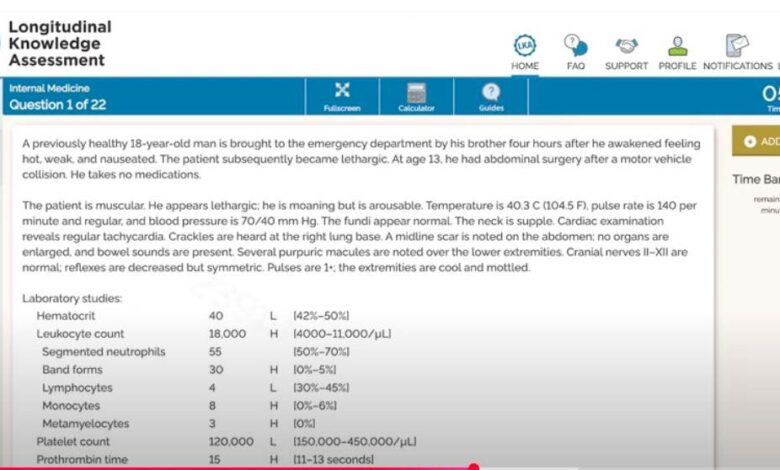
The importance of physician knowledge and expertise in patient outcomes cannot be understated, according to a recent study conducted by the American Board of Internal Medicine (ABIM). The study found that patients of hospitalists who scored in the top quartile on the Longitudinal Knowledge Assessment exam were nearly 8% less likely to die within a week compared to patients of doctors with lower scores.
Furman McDonald, president and CEO of ABIM, emphasized the significant impact of physician knowledge on patient survival rates. He pointed out that the difference in mortality rates between top-scoring and lower-scoring physicians translated to about four lives saved per thousand hospital admissions, which is more than the mortality rate from cardiovascular disease.
The Longitudinal Knowledge Assessment exam is designed to assess physician clinical knowledge and promote continuous learning. Physicians who achieve top scores on this exam are more likely to have better patient outcomes, as evidenced by the study’s findings. The study analyzed the medical records of over 260,000 Medicare patients and the test scores of more than 4,000 hospital medicine specialists.
The correlation between physician knowledge, as measured by ABIM exams, and patient outcomes has been established for decades. The ABIM oversees certification for over 270,000 physicians across 22 subspecialties, making the potential impact of this study far-reaching. Previous research has also shown a link between ABIM certification exam scores and improved patient outcomes.
One of the study’s notable features was its methodology, which allowed for a comparison of physicians as if they were working in the same hospital, minimizing the influence of the facility on outcomes. The study also made adjustments to ensure the reliability of its conclusions, underestimating the extent to which higher scores indicate quality.
The introduction of the Longitudinal Knowledge Assessment exam as an open-book, quarterly assessment has proven to be a more effective tool for evaluating physician knowledge and judgment. The continual feedback provided by the exam dashboard allows doctors to track their progress and focus on areas for improvement before the recertification test.
Physicians are highly motivated to enhance their knowledge and skills, and the ABIM is committed to monitoring and improving the assessment process to ensure its effectiveness in promoting better patient care. The use of realistic clinical vignettes in exam questions aims to assess judgment rather than rote knowledge, ensuring that physicians who score higher are truly more knowledgeable and capable of providing quality care.
In conclusion, the study highlights the critical role of physician knowledge in patient outcomes and underscores the importance of continuous learning and assessment in improving healthcare quality. By prioritizing ongoing education and evaluation, physicians can enhance their skills and ultimately provide better care for their patients.